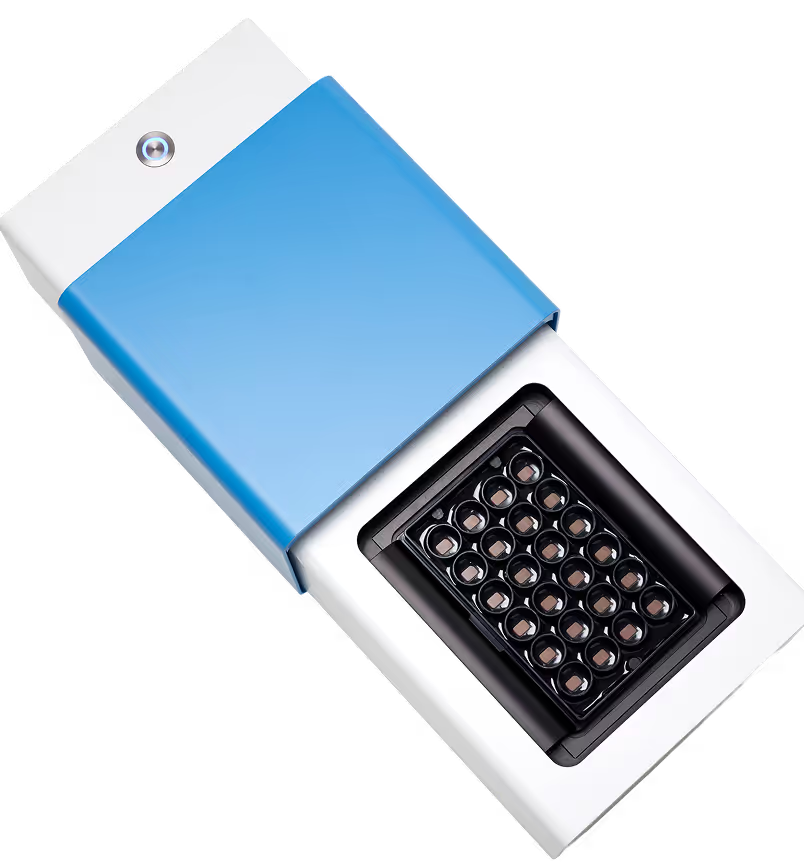
Focus on Neuro-
Disease Modeling
Disease modeling with in vitro cellular systems allows researchers to recreate and study mechanisms of neurological disorders in controlled experimental settings. As patient-derived and genetically engineered neuronal models become more human-relevant and more complex, the challenge shifts to establishing robust, reproducible functional phenotypes that can be compared across studies.
In 2026, this focus brings together the newest Disease Modeling material we publish. You’ll find a broad range of content, spanning from expert webinars to additional supporting materials added as they become available. The emphasis is on electrophysiology and readouts from network to subcellular scale, plus practical strategies and shared best practices from the field.
Featured Content
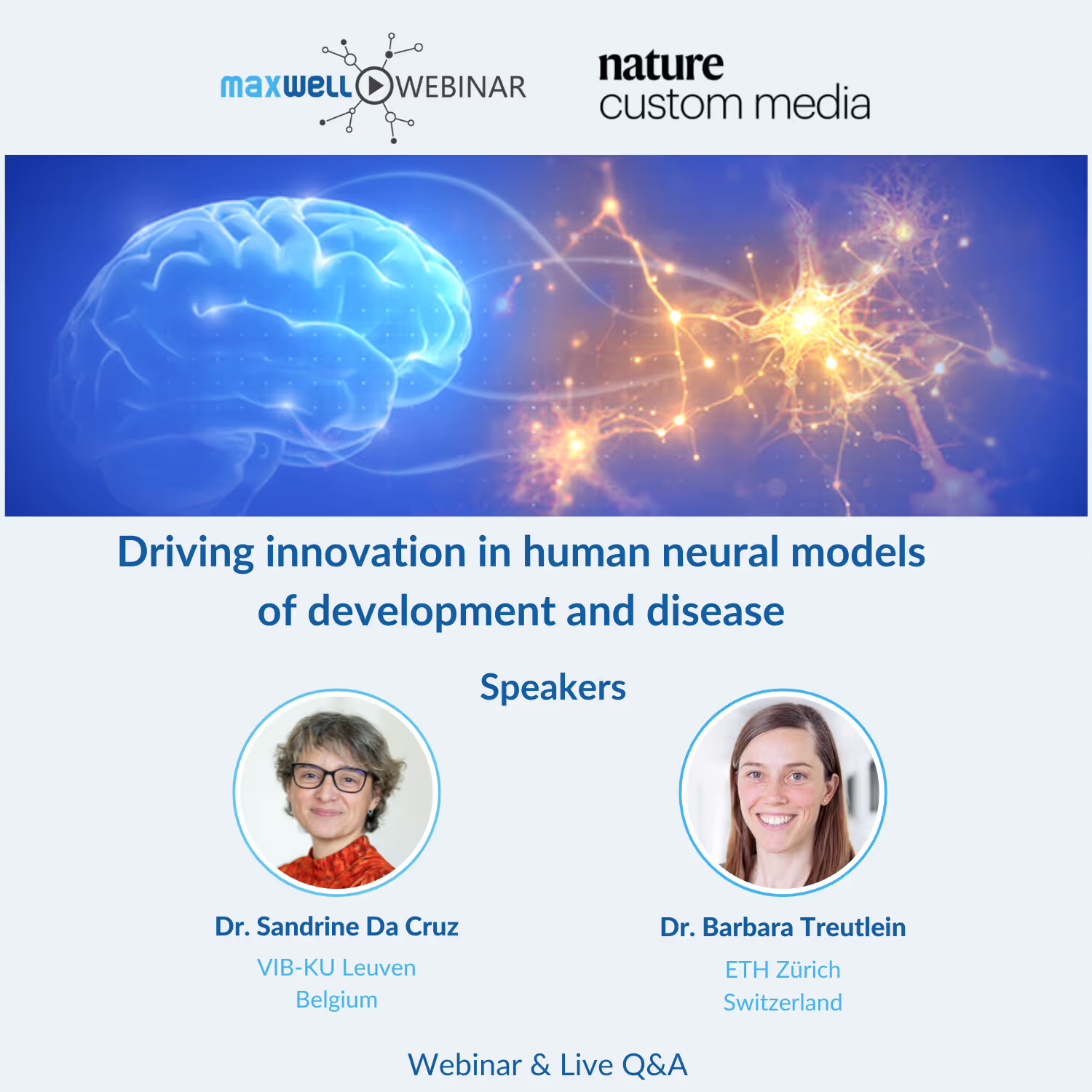
Explore how human neural models are advancing research in brain development and neurological disease, from neuronal subtype programming to axonal vulnerability.
Presented by Nature Custom Media, this webcast brings together expert perspectives on building more informative in vitro models for studying disease mechanisms and neuronal function.
Explore by Disease Area

Parkinson's Disease (PD)
Parkinson’s Disease is a progressive neurodegenerative disorder classically defined by the selective loss of dopaminergic neurons, dopamine depletion, and the accumulation of misfolded α-synuclein. Beyond neuronal loss, PD is increasingly understood as a disorder of neuronal activity and circuit dynamics, with early changes in firing behavior, network coordination, and connectivity.
The selected metrics below highlight functional readouts that can help characterize PD-relevant phenotypes in vitro, from changes in neuronal excitability and firing regularity to altered network synchronization and impaired axonal signal propagation. Together, these measurements provide a practical framework for studying how disease-associated changes emerge across single-cell, network, and axonal scales.
Below, you well also find curated Parkinson’s disease modeling resources, including webinars, blog articles, publications, conference-related content, and additional practical resources as they become available.
Relevant Metrics
The table below summarizes selected, literature-supported functional metrics for quantifying PD-relevant phenotypes in vitro. These readouts can be recorded using MaxWell Biosystems’ HD-MEA technology and analyzed with MaxLab Live, an all-in-one software for high-content electrophysiology.
Dysregulated neuronal excitability
- Mean Firing Rate (Hz)
- Spike Amplitude (μV)
Disrupted firing regularity
- Inter-Spike Interval (ISI) coefficient of variation (ISI-CV)
- ISI (ms) Distribution (Histogram)
Altered network synchronization
- Burst Frequency (Hz)
- Spikes within Bursts (%)
- Spikes per Burst
- Burst Peak Firing Rate (Hz)
Changes in network temporal organization
- Burst Duration (s)
- Inter-Burst Interval (IBI) coefficient of variation (IBI-CV)
- IBI (s) Distribution (Histogram)
Impaired signal propagation
- Neuron Conduction Velocity (m/s)
- Longest Latency (ms)
Disrupted axonal integrity
- Number of Analyzed Neurons with Branches
- Total Axon Length (μm)
Webinars

Blogs
Beyond Neurodegeneration: Functional Signatures of Parkinson’s Disease with HD-MEAs

Parkinson’s disease involves early dysfunction in neuronal activity and circuit dynamics, not only neuronal loss. This blog shows how HD-MEAs and MaxLab Live assays quantify functional metrics across single cells, networks, and axonal pathways in human-relevant PD models.
Conferences

Amyotrophic Lateral Sclerosis and Frontotemporal Dementia
Amyotrophic lateral sclerosis and frontotemporal dementia are clinically distinct but biologically connected neurodegenerative disorders that can share genetic causes and overlapping molecular mechanisms.
Both diseases involve progressive neuronal dysfunction, altered excitability, synaptic and axonal changes, and network-level impairment that can be studied in human-relevant in vitro models.
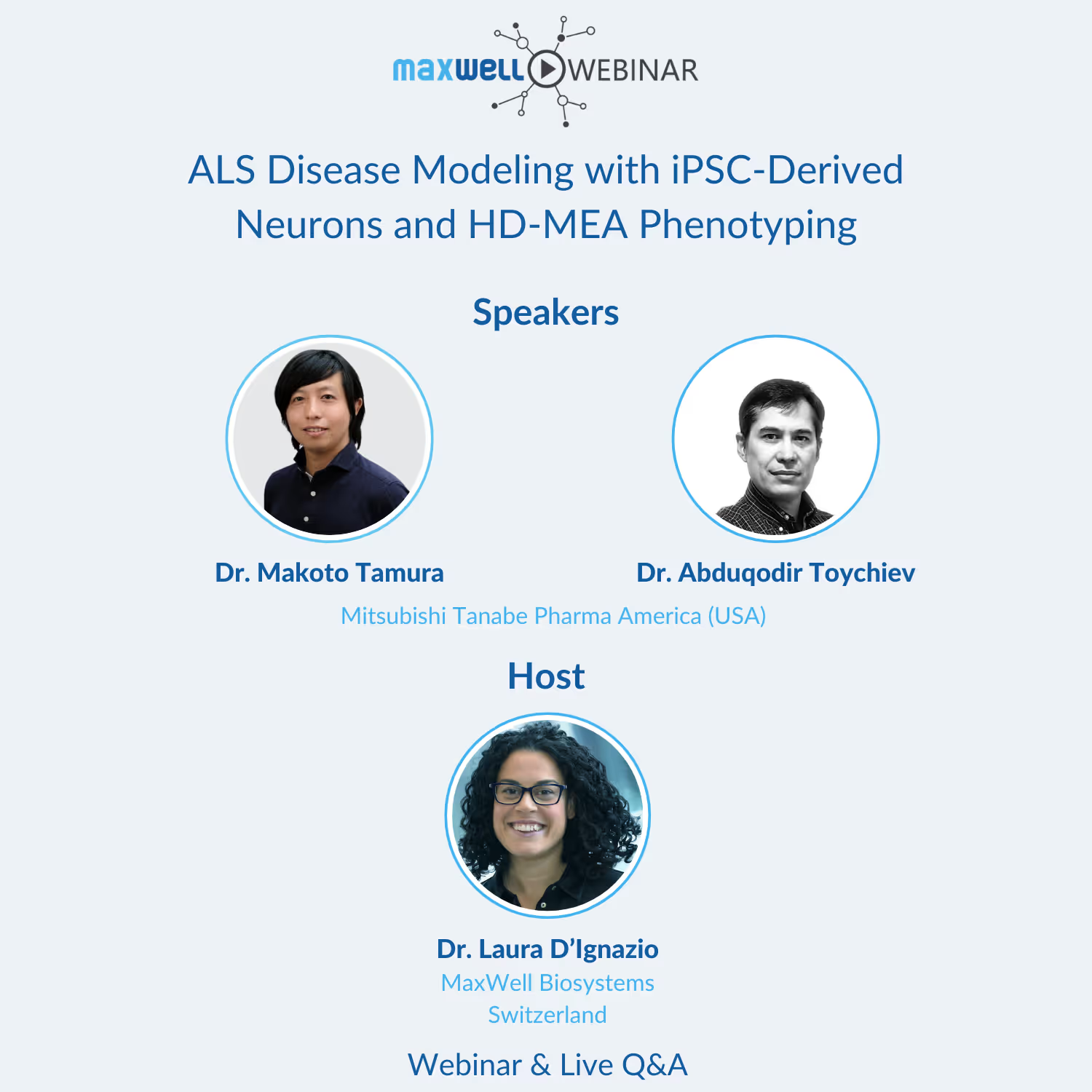
Webinars
Resources
Blogs
New Therapeutic Target in the Fight Against ALS

A Nature study presents a human iPSC-derived neuronal network model that reveals how TDP-43 dysfunction drives neurotoxicity in ALS/FTLD and highlights NPTX2 as a promising therapeutic target. Using MaxWell Biosystems' MaxOne HD-MEAs, the team captured high-resolution functional readouts of these networks, supporting detailed characterization from network down to single-cell features.
Conferences
.avif)


Pain
Chronic pain arises from persistent changes in sensory signaling pathways, where peripheral and central neurons can become abnormally excitable or sensitized.
Disease-relevant models can help investigate altered nociceptive signaling, spontaneous activity, and treatment responses in human neuronal systems.
User Voices

Modeling Pain-Related Nociceptive Networks with HD-MEA and Microfluidics
Epilepsy
Epilepsy is characterized by recurrent, abnormal electrical activity in the brain, often linked to excessive neuronal excitability and disrupted network synchronization.
In vitro seizure models can help study burst dynamics, recurrent activity, and network instability as functional features of hyperexcitable neural circuits.
Webinars
- Neuropsychiatric Disorders
Neuropsychiatric disorders involve complex changes in brain development, synaptic function, circuit connectivity, and neural network activity.
Human neural models can help investigate subtle functional phenotypes that may not be captured by molecular or structural readouts alone.
User Voices
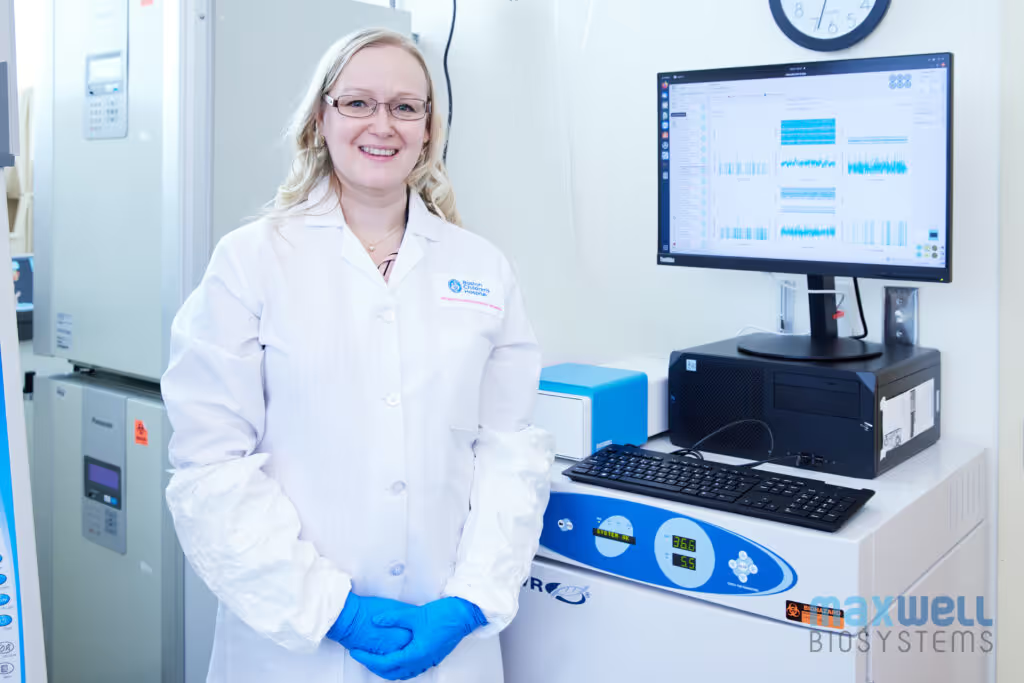
Modeling Neurodevelopmental Disorders with Human iPSC Networks on HD-MEA
Other Diseases
Neurological and neurodegenerative diseases can affect different cell types, circuits, and disease mechanisms, but many converge on altered neuronal function.
This section collects additional resources for disease models where functional readouts can support characterization, comparison, and therapeutic testing.
Webinars
.avif)
Resources
Conferences

Dr. Danny McSweeney
“Our team is using the MaxOne HD-MEA System to probe neuronal network synchrony for human induced cortical excitatory neurons across genetic backgrounds. Changes in bursting patterns between wild-type and CASK-knockout genotypes manifest through severe deficits in neuronal burst frequency, mean spikes per burst, and mean inter-burst intervals. To investigate these changes, the MaxOne HD-MEA System provides us an easy, straightforward, and user-friendly system.”