Functional Phenotyping of Neurodevelopmental Disease Models on MaxOne HD-MEA
Date
Type
Tags
"The built-in analysis module was the best part of the MaxLab Live Software. I have little to no experience with analyzing this type of dataset and no familiarity with programs like R and MATLAB. The ability to easily analyze data with the MaxLab Live Software was wonderful, with suggested defaults, multiple export runs in single files and further data wrangling and graphing."
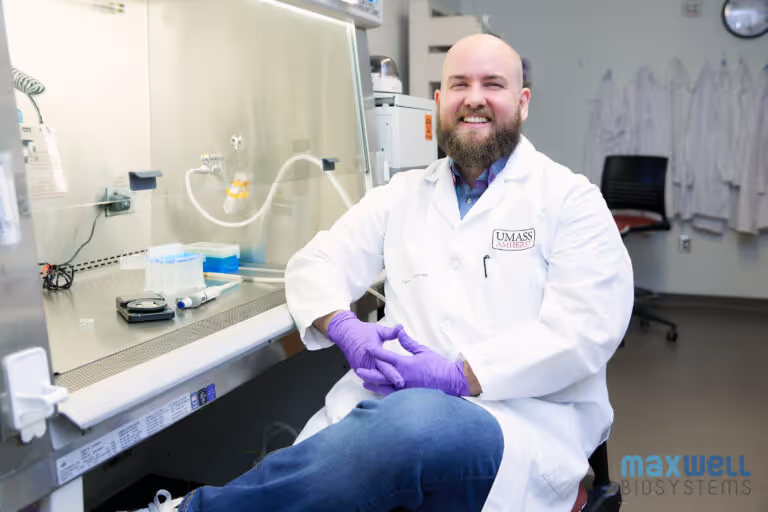
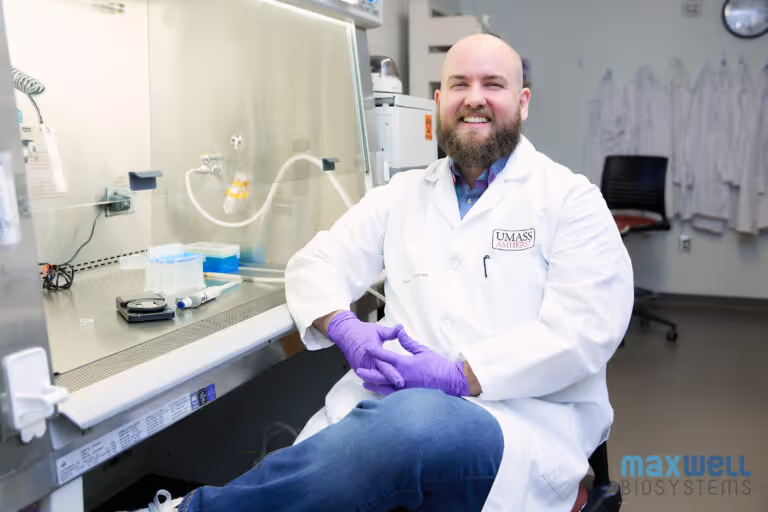
Danny McSweeney recently published in iScience (McSweeney et al., 2022, iScience). As we wanted to hear more about it, Danny answered some questions to give us insights into his research and told us how MaxWell Biosystems Technology played a role in this project. Read the testimonial below to learn more.
In this
conversation

Could you please summarize your research for us?
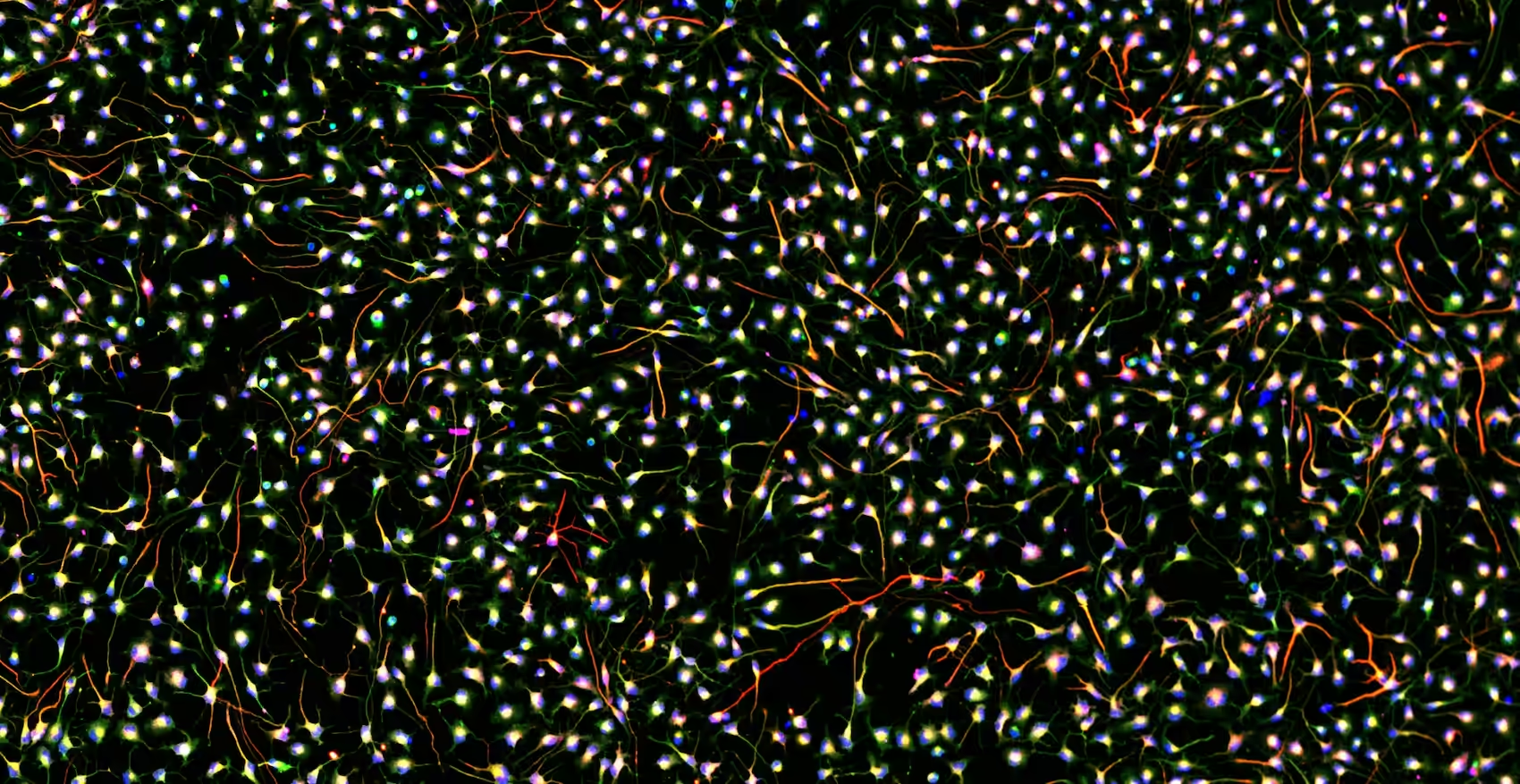
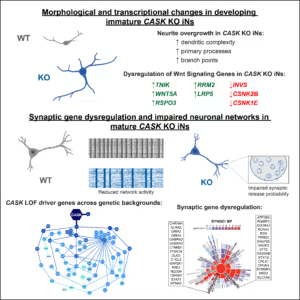
Multiple protein kinases serve as essential players during neuronal maturation, and synapse formation and maintenance. Human mutations in these genes are apparent in patients with severe neurodevelopmental disorders, thereby affecting a large percentage of the human population. One neurodevelopmental disease-associated protein kinase we are currently studying is called CASK (Calcium/Calmodulin Dependent Serine Protein Kinase). We recently reported that loss-of-function (LOF) mutations of CASK differentially regulate neuronal maturation and synaptic function in human induced cortical excitatory neurons (McSweeney et al., 2022, iScience). CASK LOF induces neuronal outgrowth in early maturing cells, suggesting that CASK functions to restrict dendritic morphogenesis at this developmental time window. Transcriptomic analysis of CASK LOF immature neurons revealed that these KO cells resemble morphology and gene expression programs associated with hyperactivated WNT signaling pathway.
We are currently testing which proteins are being regulated by CASK during neuronal maturation. Post neuronal maturation, neurons lacking CASK show significant impairment in neurotransmitter release and network connectivity. Synaptic signaling is impaired in these cells similar to what has been observed in previous works. From this project, we are learning that protein kinases important for neurodevelopment performs distinct functions during neuronal growth and synapse maturation, which encourages us to understand the developmental timing-dependent functions of these molecules.
Can you explain how you are using MaxWell Biosystems products for your research?
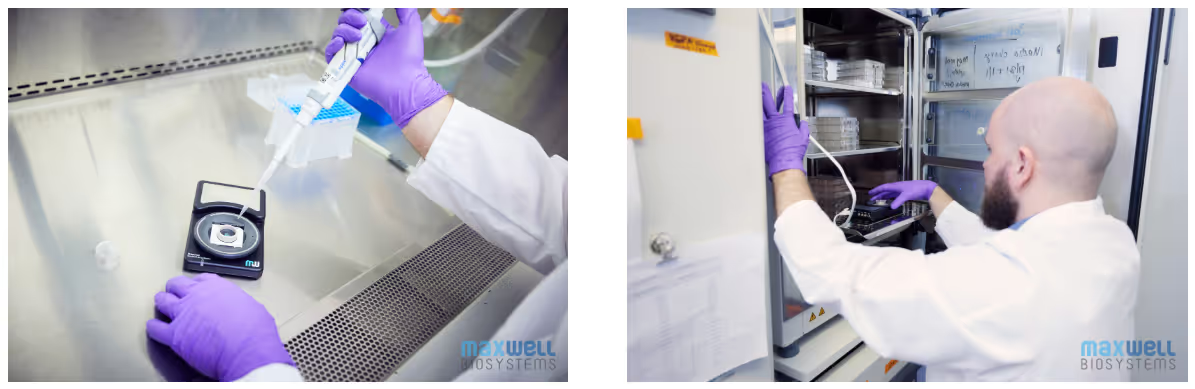
Currently, our team is using the MaxOne HD-MEA System to probe neuronal network synchrony for human induced cortical excitatory neurons across genetic backgrounds. Change in bursting patterns between wild-type and CASK-knockout genotypes manifest through severe deficits in neuronal burst frequency, mean spikes per burst, and mean inter-burst intervals. At the spike level, we observed significant decreases in mean firing rate and mean spike amplitudes with increases in mean inter-spike intervals. To investigate these changes, the MaxOne HD-MEA System provides us an easy, straightforward, and user-friendly system to culture human induced excitatory neurons with glia (to aid in neuronal maturation and synapse formation) and plate co-cultures directly on top of the array. Once cultures reached maturity, passive recordings were performed once a week over four weeks to track spike and bursting activity over time.
We are currently in the process of integrating the AxonTracking Assay into our research to investigate how signal propagation starts and how it travels throughout the culture resulting in the synchronous bursts we observe.
Which feature of our products do you appreciate the most?
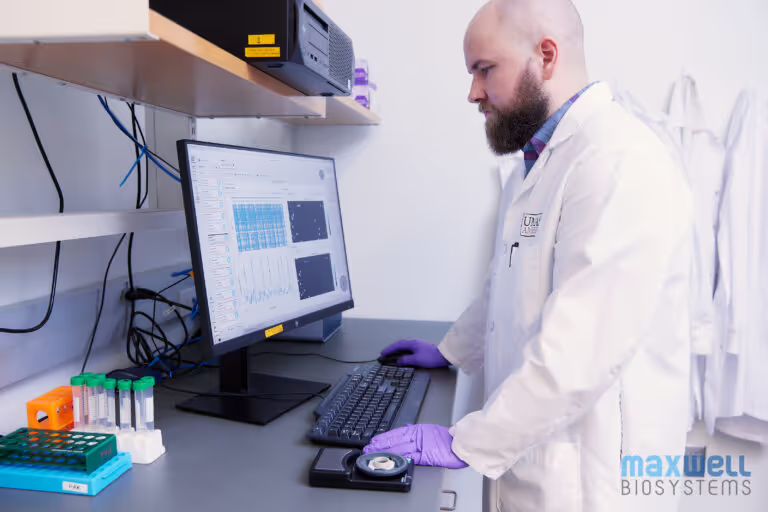
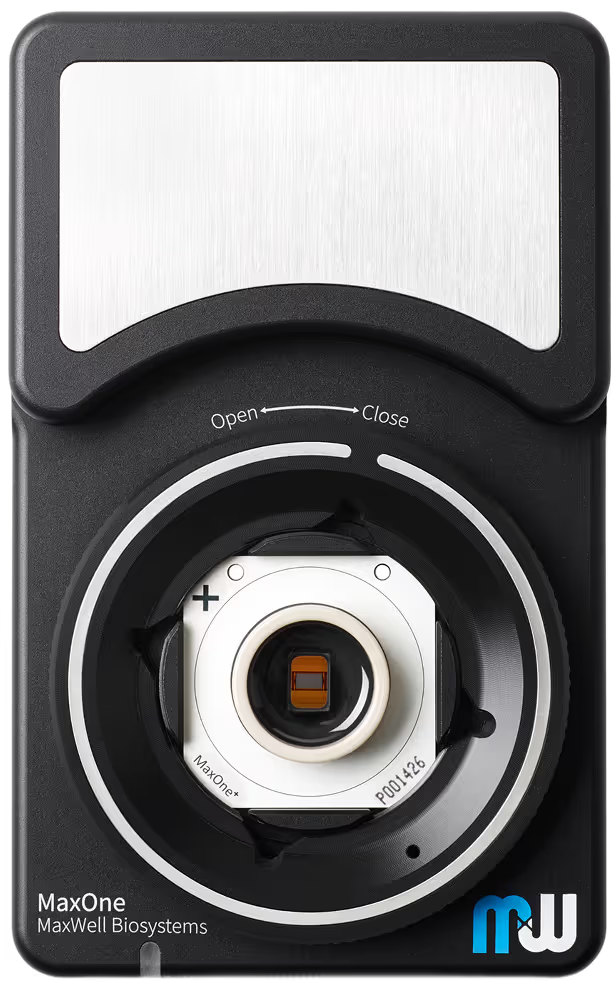
MaxOne Chip recordings were very straight-forward and easy to perform. From loading the MaxOne Chip into the Recording Unit and running recordings, the process was user-friendly. The built-in analysis module was the best part of the software. I have little to no experience with analyzing this type of dataset and no familiarity with programs like R and MATLAB. The ability to easily analyze data with MaxLab Live Software was wonderful, with suggested defaults, multiple export runs in single files and further data wrangling and graphing.
Have there been any challenges and how did MaxWell Biosystems help to resolve them?
One challenge I have had with the platform is occasional contamination. I believe this is due to the small space between the lid and the upper edge of the MaxOne Chip’s walls. After consulting with the MaxWell Biosystems team, we discovered the importance of secondary containment and careful handling during media changes to prevent any liquid being knocked into this space, which greatly reduces the chance of contamination.
Is there anything else you would like to share with our readers?
We have very much enjoyed integrating MaxWell Biosystem’s technology into our research, and it has produced some of our most visually striking data yet. The raster plots are a gorgeous way to observe bursting synchronous activity across genotypes. I would also like to send a shout-out to the entire team at MaxWell Biosystems, from the company leaders and technical support teams all the way to Marketing and event-organizing. We have enjoyed working with every single person at MaxWell. The entire team is a delight to work with and always eager to help with problem-solving and troubleshooting our specific experiments. We cannot say enough good things about the people, and we look forward to continuing our collaboration.
Thank You
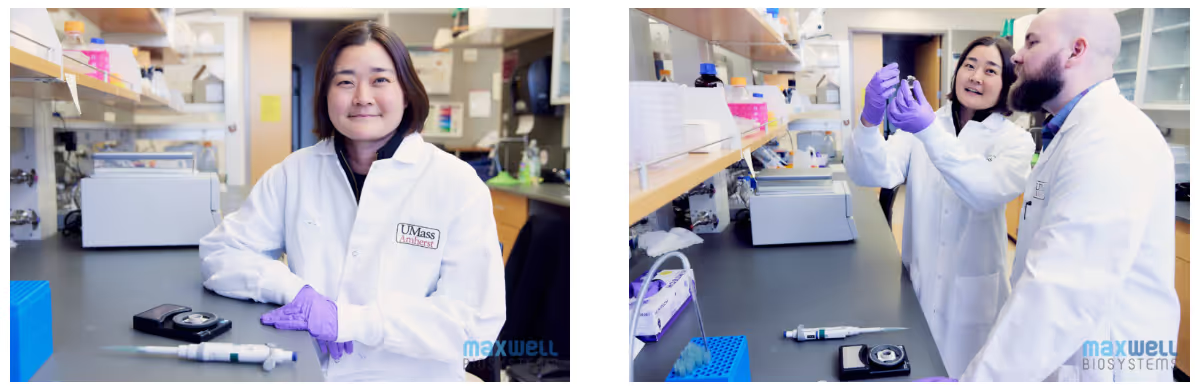
We would very much like to thank Danny McSweeney and Prof. Dr. ChangHui Pak for making time in their busy schedules to take part in this testimonial for us. We are very appreciative of this collaboration.
Discover More
Would you like to learn more about our HD-MEA technology and applications and how it can elevate your research? Our experts are ready to answer your questions. Contact us!
Related Resources
MaxOne
Versatility and functionality in one compact device
MaxLab Live
All-in-one Software

Our Technology
Multi-/Micro-electrode Arrays
Disease Modeling
Neuronal Cell Cultures