Beyond Every Well: New Frontiers in Functional Discovery
This year MaxWell Biosystems turned ten, and what moved us most was seeing so many familiar faces, old and new, fill our home in Zurich to celebrate with us. It reminded us that our story has always been written together with you: through your discoveries, your ideas, and the collaborations that keep pushing neuroscience and drug discovery forward.
And we keep building on that. MaxLab Live 26.1 brings new analysis tools for neuronal and cardiac models, making it even easier to get meaningful functional information from every recording.
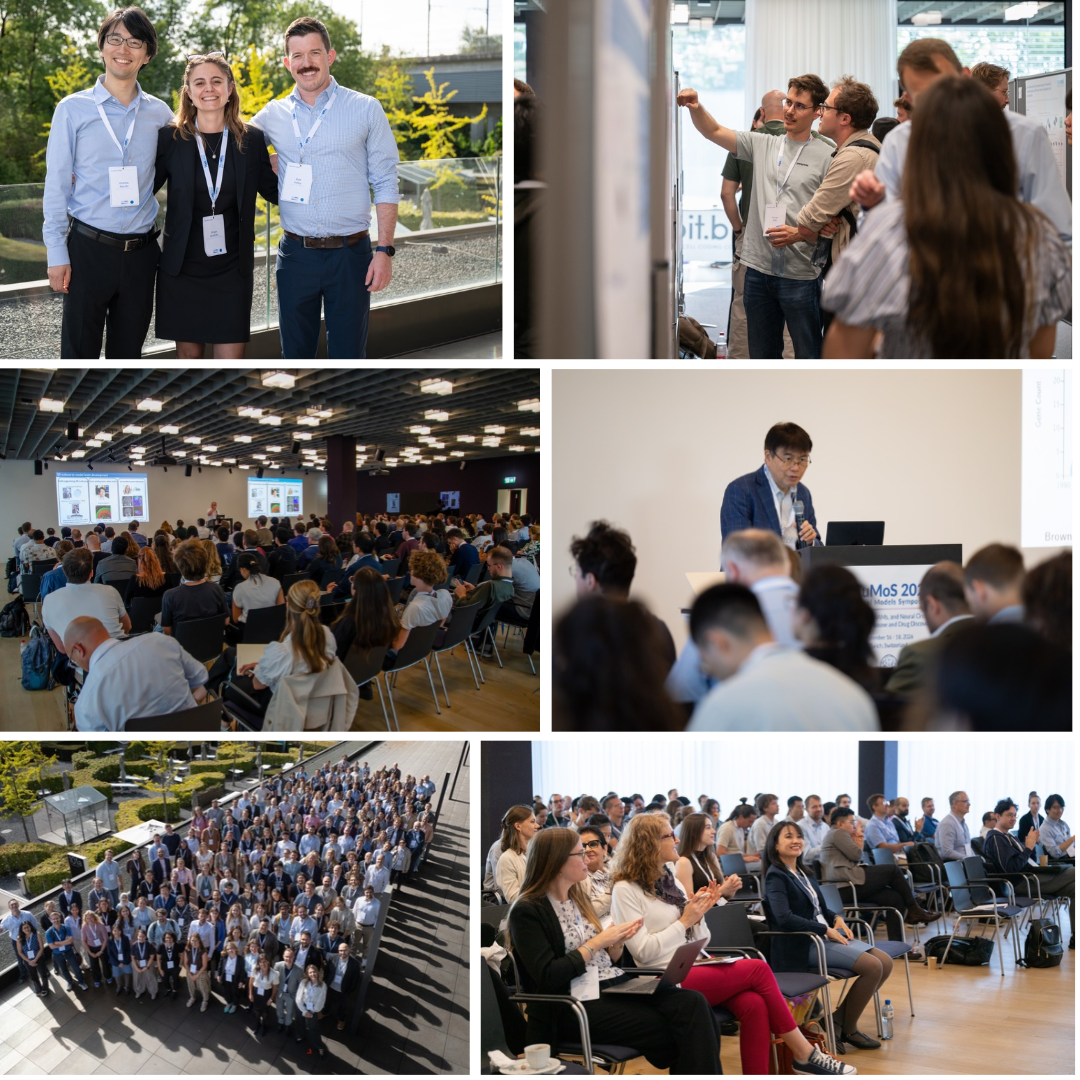
Science grows when people connect. NeuMoS 2026 brought together researchers working on neural models, electrophysiology, bioengineering, neurocomputing, and drug discovery. Our community also came together to support ALS research through Run for ALS.
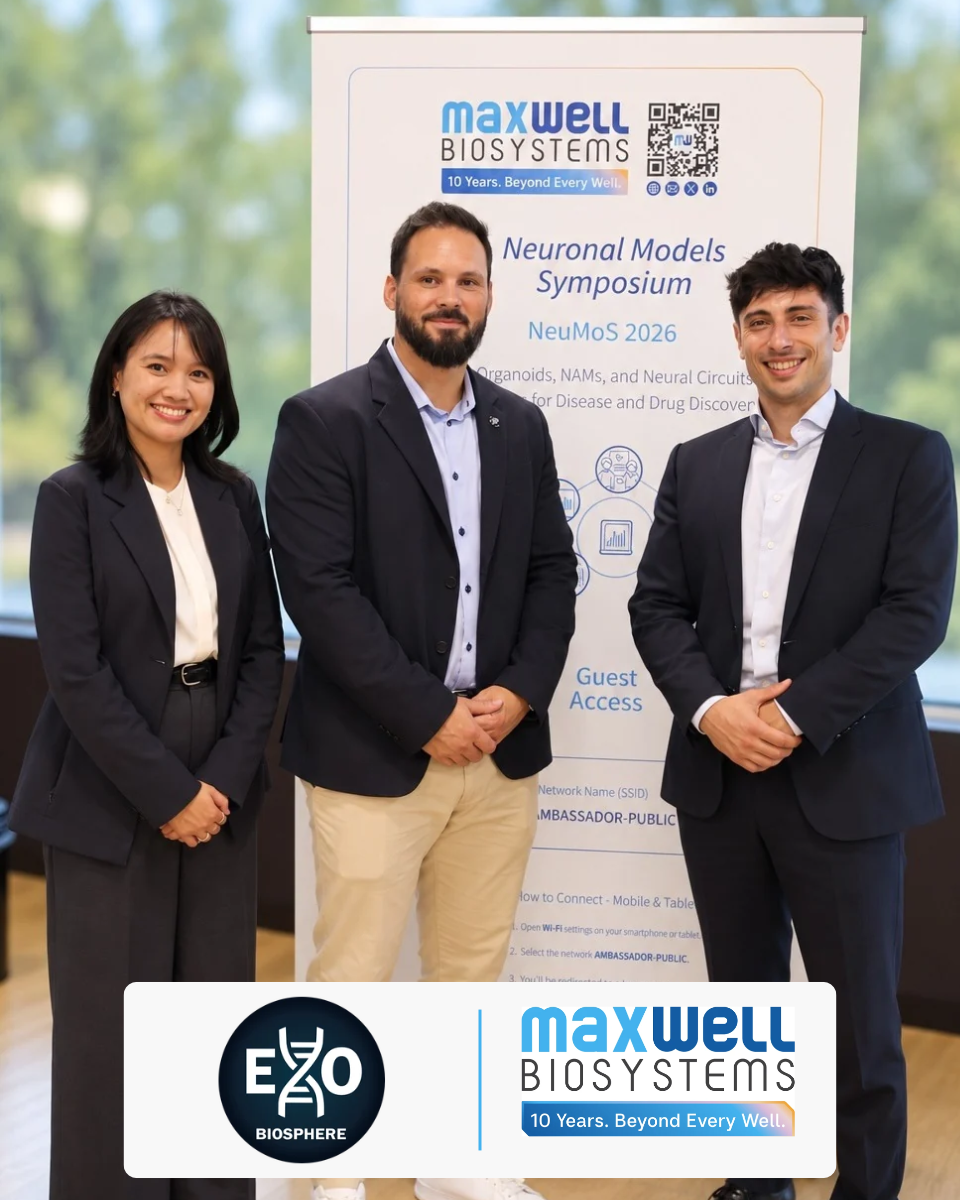
We are also heading beyond Earth! With our new partner Exobiosphere, we are exploring how high-content electrophysiology can help us study neuronal and cardiac function in space.
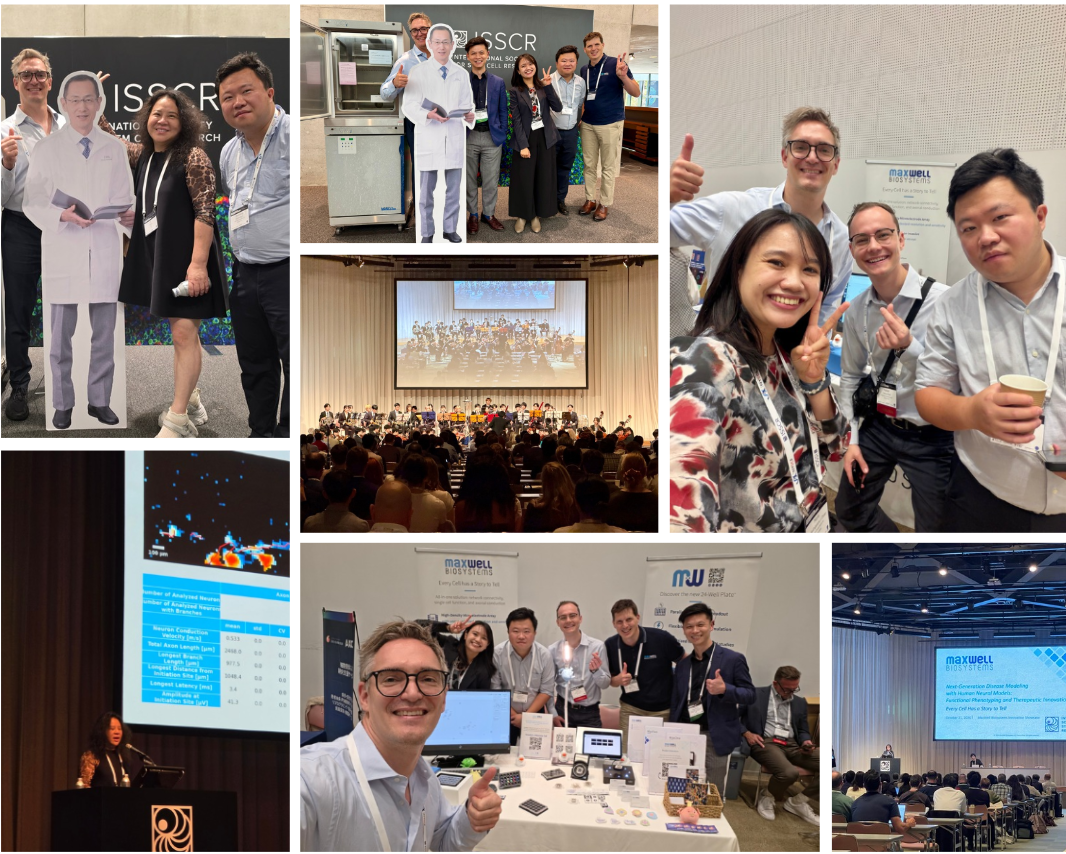
Back on Earth, we joined the 20th anniversary of iPSC discovery in ISSCR Kyoto, a reminder of how one breakthrough can transform a whole field. Next, find us at Neuroscience 2026 (SfN) in Washington, DC, and at the ISSCR Symposium in San Diego, which we are proud to co-organize.
Before you go, browse the latest publications from our community and meet Tina, the retinal cell, in the newest chapter of Every Cell Has a Story to Tell. She has an eye for detail and sees the world in a different light!
10 Years - Beyond Every Well
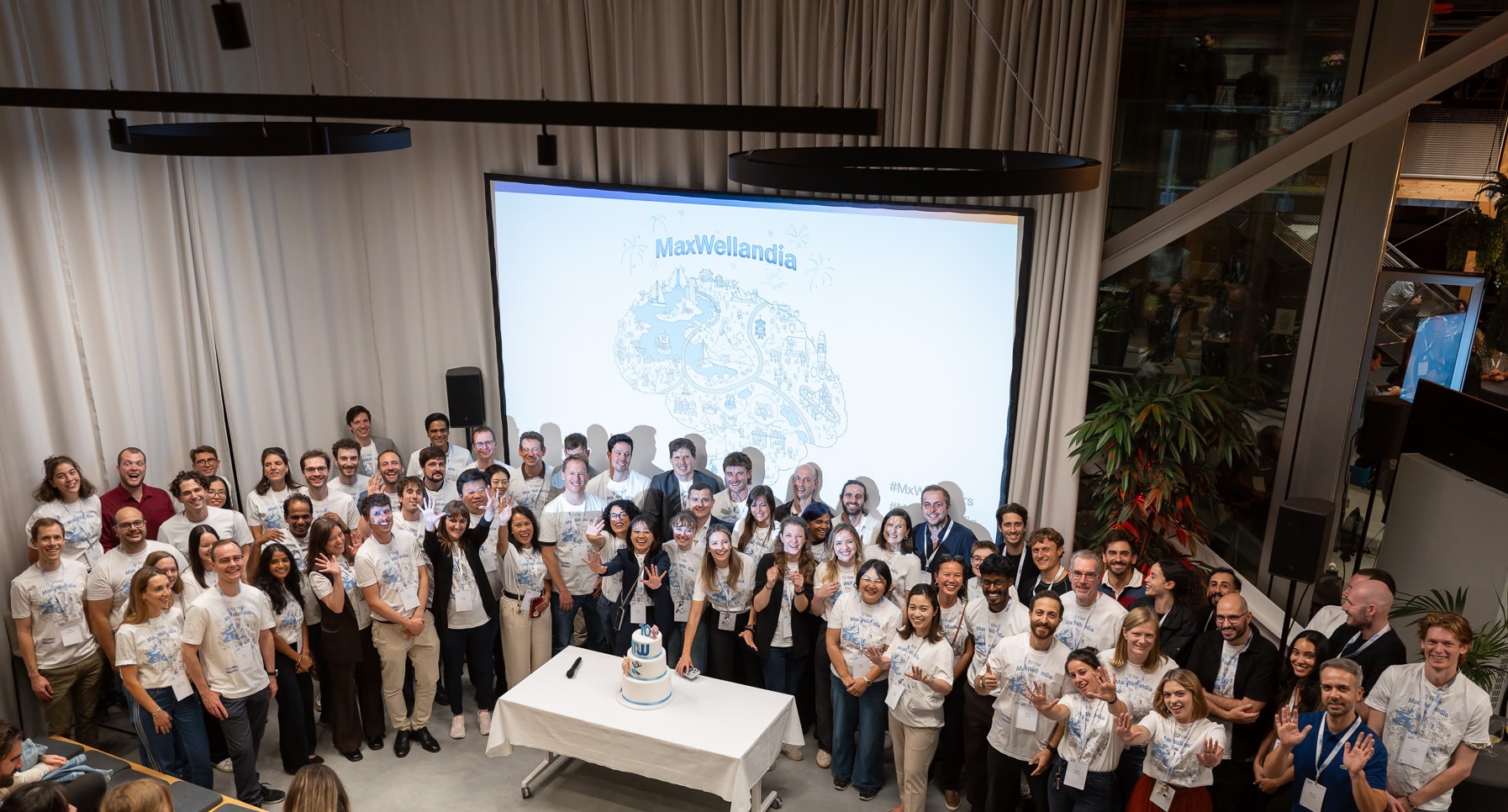
What began as pioneering high-density microelectrode array (HD-MEA) research at ETH Zurich has grown into MaxWell Biosystems, a global company bringing high-content electrophysiology to labs around the world. To celebrate ten years, we opened the doors of our Zurich headquarters to colleagues, users, partners, friends, and family, and welcomed them to MaxWellandia!
MaxWellandia is more than a place. It’s the community we’ve built together, shaped by innovation, trust, and collaboration. We look back with gratitude, and we’re excited to write the next chapter with you.
Now it is your turn to bring MaxWellandia to life! Discover the people and milestones behind our journey. Download our MaxWellandia coloring page. Grab your coloring pencils and make it your own!
Science that Inspires New Possibilities
The shared commitment to advancing neuroscience extends far beyond the symposium. From exploring the computational potential of living neural networks to supporting the fight against ALS, our community continues to turn curiosity into action.
When Structure Shapes Computation
How does the architecture of a neural network influence the way it processes information?
From engineered neural circuits to brain organoids and connectoids, advances in microphysiological systems (MPS) are opening new ways to investigate the relationship between structure, function, and neural computation.
Explore how researchers are designing increasingly complex in vitro models and using high-content electrophysiology to understand their functional properties and computational potential.
Every Step Counts: Running for ALS Research
At NeuMoS 2026, with our Run for ALS, we brought members of our community together to raise awareness and support the fight against amyotrophic lateral sclerosis (ALS).
What started in Zurich continued all the way to Kyoto, where MaxWellers once again laced up their running shoes to keep the momentum going!
Our fundraising campaign is still open, and every contribution can make a difference. Join us in supporting ALS research and help us take the next step together!
Are you attending Neuroscience 2026 (SfN 2026)? Do not miss our next run in Washington, DC.
Your Data Have More to Reveal. MaxLab Live 26.1 is here!
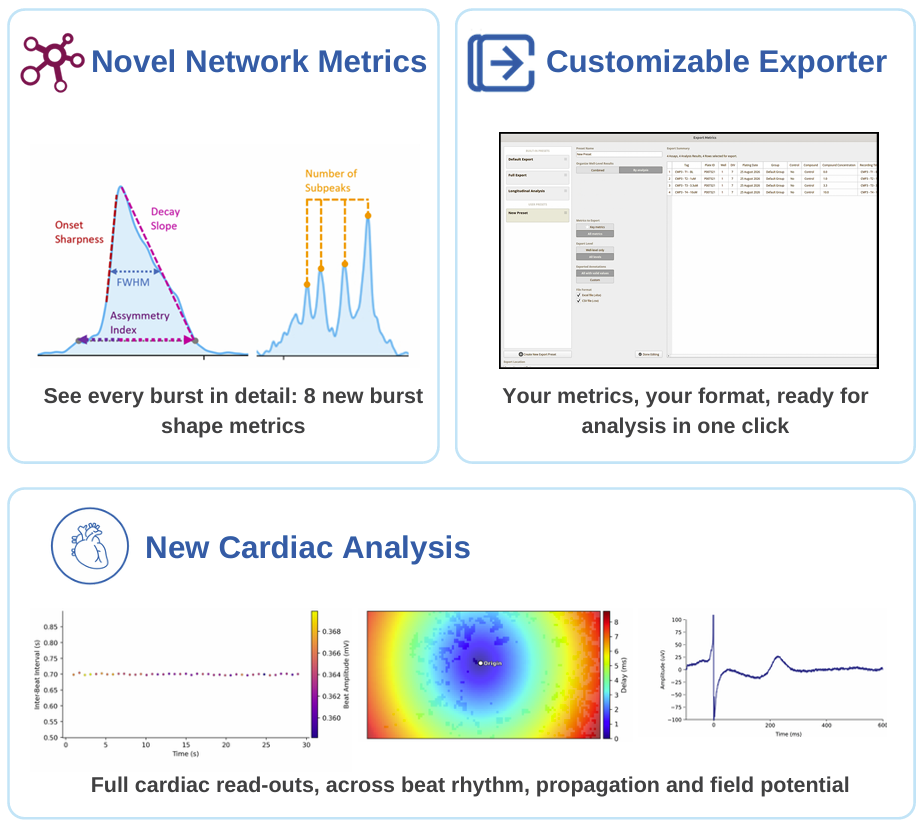
Every recording holds more information than conventional metrics can capture.
MaxLab Live 26.1 makes it easier to turn complex electrophysiological data into meaningful biological insights. From revealing subtle changes in neuronal network activity and synchronization to characterizing cardiac rhythm, and electrical propagation, the new analysis capabilities help you uncover functional phenotypes that conventional readouts may miss.
With new automated analysis workflows and customizable data exports, MaxLab Live 26.1 helps you get more insights from every recording, compare experimental conditions more consistently, and spend less time on manual analysis.
NeuMoS 2026
Advancing our understanding of complex neural systems requires innovative technologies, but also different scientific perspectives, experimental approaches, and expertise.
From stem cells and organoids to New Approach Methodologies (NAMs), electrophysiology, engineering, computational neuroscience, and drug discovery, NeuMoS 2026 brought together researchers, innovators, and industry experts from across disciplines for two and a half days of inspiring talks and practical workshops in Zurich.
What began five years ago as a technology-focused meeting has evolved into a vibrant interdisciplinary symposium, fostering new connections, perspectives, and collaborations.
Stay tuned for the upcoming NeuMoS Spotlights where we will continue sharing scientific perspectives and insights from the symposium. And mark your calendars: NeuMoS returns in September 2028!
High-Content Electrophysiology Goes to Space
What happens to living cells in space? What could their electrical activity reveal about how biological systems respond to this unique environment?
Through an exciting new partnership with Exobiosphere, MaxWell Biosystems is taking the next steps toward bringing high-content electrophysiology into orbit. Combining our HD-MEA technology with Exobiosphere's Orbital High-Throughput Screener, we aim to enable high-resolution functional characterization of neuronal and cardiac models in space.
Celebrating 20 Years of iPSC Discovery in Kyoto
From the discovery of induced pluripotent stem cells (iPSCs) to advances in disease modeling and regenerative medicine, the past 20 years have transformed biomedical research.
At the ISSCR International Symposium in Kyoto, we joined researchers from around the world to celebrate this milestone and explore the future of the field. From an inspiring orchestral opening to insights from Prof. Shinya Yamanaka, the symposium was a memorable celebration of scientific progress.
Our team contributed through an Innovation Showcase and two poster presentations, highlighting how high-density microelectrode array (HD-MEA) technology enables functional characterization of human iPSC-derived neural models. Together with Dr. Yi Sun, we explored applications spanning axon tracking in ALS models, neuronal maturation in midbrain organoids, and early functional alterations in FTD models.
We left Kyoto inspired by the progress of the past two decades and excited to continue supporting the discoveries still to come!
Related
Resources
Stimulation modulates gene-linked cell assemblies in the human brain

Click chemistry-modified cardiomyocytes enhance cardiac contractility and prevent remodeling in ischemia-reperfusion injured hearts
An Innervated Human Skin Equivalent that Electrically Encodes Mechanical and Thermal Stimuli
Thalamic NRXN1-mediated input to human cortical progenitors drives excitatory neurogenesis

Unveiling WholeWater Neurotoxicity through SensitiveElectrophysiological Functional Profiling: Beyond Conventional MorphologicalMetrics

MxW - InSphero Application Note

MxW - ThermoFisher Scientific Application Note
Compound Administration Protocol
Every Cell Has a Story to Tell
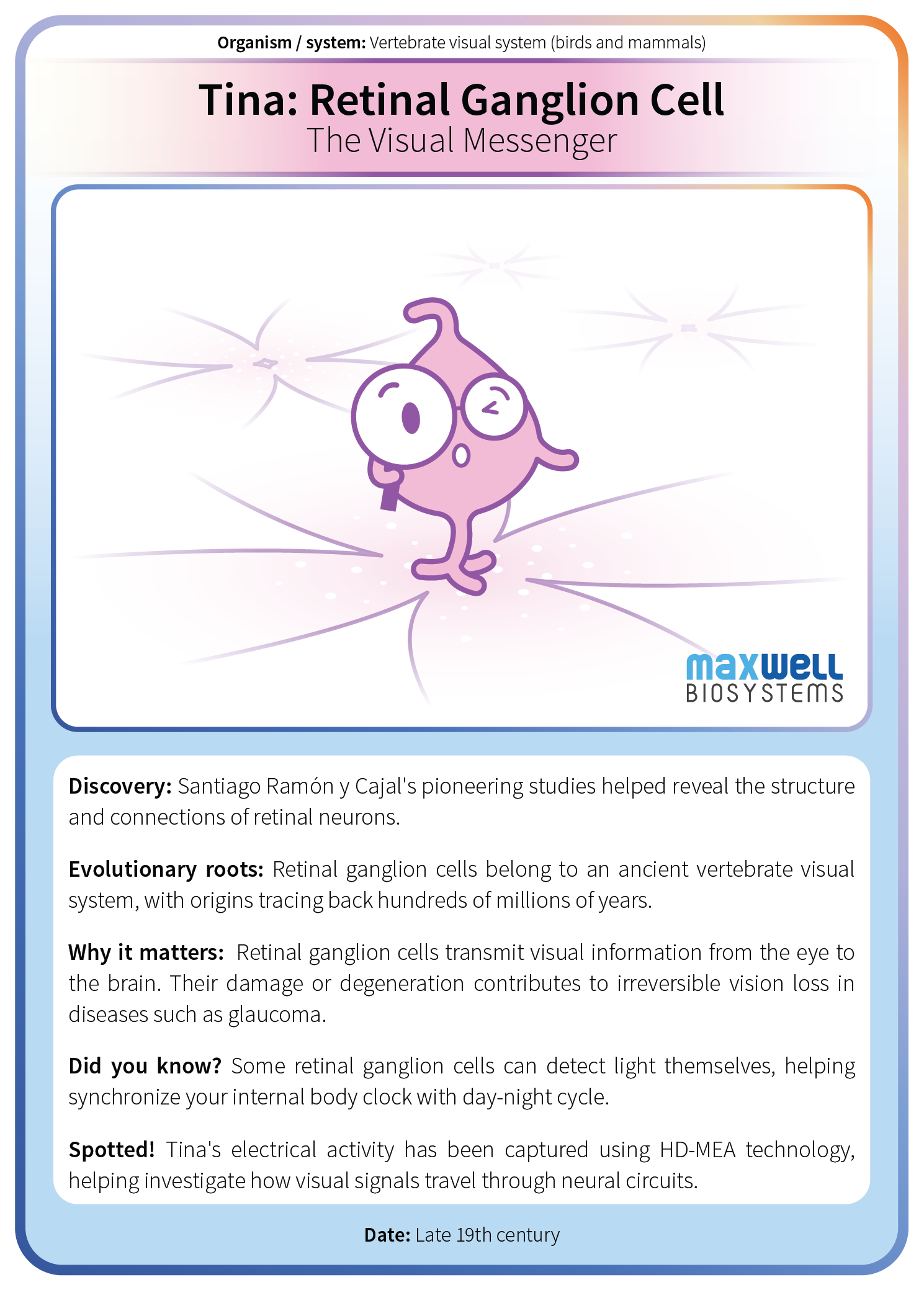
Our resident retinal ganglion cell: a little clumsy, always curious, and with an eye for detail!
Tina may live in the eye, but she's got a direct line to the brain! As one of the retina's essential messengers, she helps turn visual information into electrical signals that travel along the optic nerve.
With her oversized glasses and slightly clumsy personality, Tina might occasionally lose her way. But when it comes to delivering important messages to the brain, she always knows where to send them!
Stay tuned for the next story. Who will you meet next?