Neurocomputing with brain organoids: closed-loop learning and network dynamics

Register
Register
Date & Time

Tuesday, April 28, 2026 | 17:00 CEST
08:00 PDT | 11:00 EDT | 23:00 CST | 00:00 JST

Tags
Biocomputing
Organoids
MaxOne

Webinar Hightlights

  • How brain organoids can be used to study network dynamics and functional organization in vitro.
  • What it takes to run closed-loop electrophysiology: reading, writing, and feedback-driven training of living networks.
  • How HD-MEA functional phenotyping can quantify changes in activity patterns and connectivity over time.
  • How organoid bio-model advances translate into biocomputing-style benchmarks and experimental pipelines.
  • Practical considerations for implementing these workflows on MaxOne (organoid culture, longitudinal recording, stimulation, and closed-loop interfacing).

Register
Register

The webinar covered

  • How brain organoids can be used to study network dynamics and functional organization in vitro.
  • What it takes to run closed-loop electrophysiology: reading, writing, and feedback-driven training of living networks.
  • How HD-MEA functional phenotyping can quantify changes in activity patterns and connectivity over time.
  • How organoid bio-model advances translate into biocomputing-style benchmarks and experimental pipelines.
  • Practical considerations for implementing these workflows on MaxOne (organoid culture, longitudinal recording, stimulation, and closed-loop interfacing).
Register
Register

Agenda

28 April, 2026 | 17:00 CEST

From Self-Organization to Learning: Mouse Forebrain Organoids as Models of Network Assembly and Goal-Directed Adaptation

Dr. Ash Robbins, Sebastian Hernandez, and Hunter E. Schweiger

Abstract

Brain organoids derived from pluripotent stem cells offer a powerful in vitro platform to study how neural networks self-organize and adapt. In this webinar, we present two complementary studies from our group at UC Santa Cruz. First, we describe the generation of dorsal and ventral mouse forebrain organoids and show how their distinct cellular compositions, particularly the enrichment of parvalbumin-positive interneurons in ventral organoids, give rise to divergent network topologies. Both organoid types develop small-world architecture without sensory input, but differ in modularity, hub organization, and synchronization dynamics, revealing how excitatory-inhibitory balance intrinsically shapes circuit formation (Hernandez, Schweiger et al., Stem Cell Reports 2026). Second, we demonstrate that cortical organoids can perform goal-directed learning when embodied in a pole-balancing task through closed-loop electrophysiology. Using adaptive training signals selected by reinforcement learning, organoids significantly improve their control performance in a manner which is shown to require intact glutamatergic transmission (Robbins et al., Cell Reports 2026). Together, these studies establish mouse forebrain organoids as a tractable system for investigating both intrinsic network assembly and stimulus-driven neural plasticity.

Abstract

Speakers
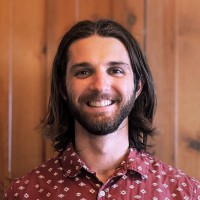
Dr. Ash Robbins

University of California, Santa Cruz (UCSC)

Biography

Ash Robbins is a PhD candidate in Electrical and Computer Engineering at the University of California, Santa Cruz, advised by Dr. Mircea Teodorescu. His research focuses on developing closed-loop electrophysiology frameworks for brain organoids, combining artificial reinforcement learning with biological neural networks. His recent work, published in Cell Reports, demonstrated goal-directed learning in cortical organoids, where mouse brain organoids learned to balance an inverted pendulum through adaptive electrical training. Ash also develops open-source tools for neural interfacing through the BrainDance platform. Outside of the lab, he is CTO and co-founder of Immergo Labs, a VR platform for physical rehabilitation.

Abstract

Hunter E. Schweiger

University of California, Santa Cruz (UCSC)

Biography

Hunter Schweiger is a PhD student in Molecular, Cell, and Developmental Biology at the University of California, Santa Cruz, co-advised by Dr. Mohammed Mostajo-Radji and Dr. David Haussler. His research focuses on understanding circuit development in the brain through the lens of evolution and neurodevelopmental disorders. His recent work, published in Stem Cell Reports, used mouse forebrain organoids to show how distinct excitatory-inhibitory compositions give rise to divergent network topologies, applying graph theory metrics to characterize differences in circuit architecture and information processing.

Abstract

Sebastian Hernandez

University of California, Santa Cruz (UCSC)

Biography

Abstract

Hosts

Dr. Marie Obien

CCO | MaxWell Biosystems (Switzerland)

Biography

Marie Obien is the Chief Commercial Officer (CCO) and a founding member of MaxWell Biosystems. Marie leads the company’s global commercial strategy, sales, business development, marketing, product management, channel partnerships, and customer success. A specialist in electrophysiology, Marie brings strong expertise in microelectrode arrays and complementary techniques, including the gold-standard patch-clamp method. She is the lead author of the most frequently cited review on MEA technology and has played a key role in shaping its adoption in neuroscience and drug discovery. Marie earned her PhD in Electrical Engineering from the Nara Institute of Science and Technology, Japan, and received neuroscience training as a postdoctoral researcher at RIKEN. She also completed the Global Innovation Program in Silicon Valley, focusing on business development and entrepreneurial leadership.

Dr. Zhuoliang (Ed) Li

Product Manager, MaxOne | MaxWell Biosystems (Switzerland)

Biography

Ed is a well-traveled and trained neuroscientist, having received his Bachelors of Science at the University of Toronto, Masters in Neuroscience at the University of Munich, and PhD in Neurobiology at the University of Basel. Ed has demonstrated his wide range of expertise and experience in in vitro and in vivo electrophysiology, calcium imaging, circuit mapping, behavior, as well as neuropharmacology through his publications on the circuitry underlying depression and anxiety. Since 2022, Ed has been a member of MaxWell Biosystems, where he is currently the Product Manager for the MaxOne Single-Well High Density Microelectrode Array System.

When he is not shaping the future of electrophysiology, Ed is all about bold moves, whether it is skiing, exploring new countries, or strategizing imaginative and unconventional ways to beat opponents in trading card games.

Sign Up for the Updates

Register

You can unsubscribe from marketing emails at any time. For details, see our Privacy Policy.

Submit
Thank you! Your submission has been received!
Oops! Something went wrong while submitting the form.
MaxWell