MaxLab Live 26.1: Advanced Analysis for High-Content Electrophysiology

The all-in-one software keeps getting better. This new release introduces novel readouts for neuronal and cardiac samples, helping you extract deeper biological insights while simplifying your overall analysis workflow.
Author
Date
Tags
What's New in MaxLab Live 26.1?
The upcoming release will expand MaxLab Live with new analysis capabilities designed to help researchers get even more from every recording, across three areas:
- Novel readouts for neuronal network activity: a deeper, more sensitive characterization of network function.
- Making cardiac research easier: dedicated analysis for full functional phenotyping of cardiac preparations.
- Simpler analysis for high-throughput studies: workflow improvements that reduce manual work.
Here is a closer look at each.
Novel Readouts for Neuronal Network Activity
Network Burst Shape Metrics
Reveal functional phenotypes hidden within every network burst.
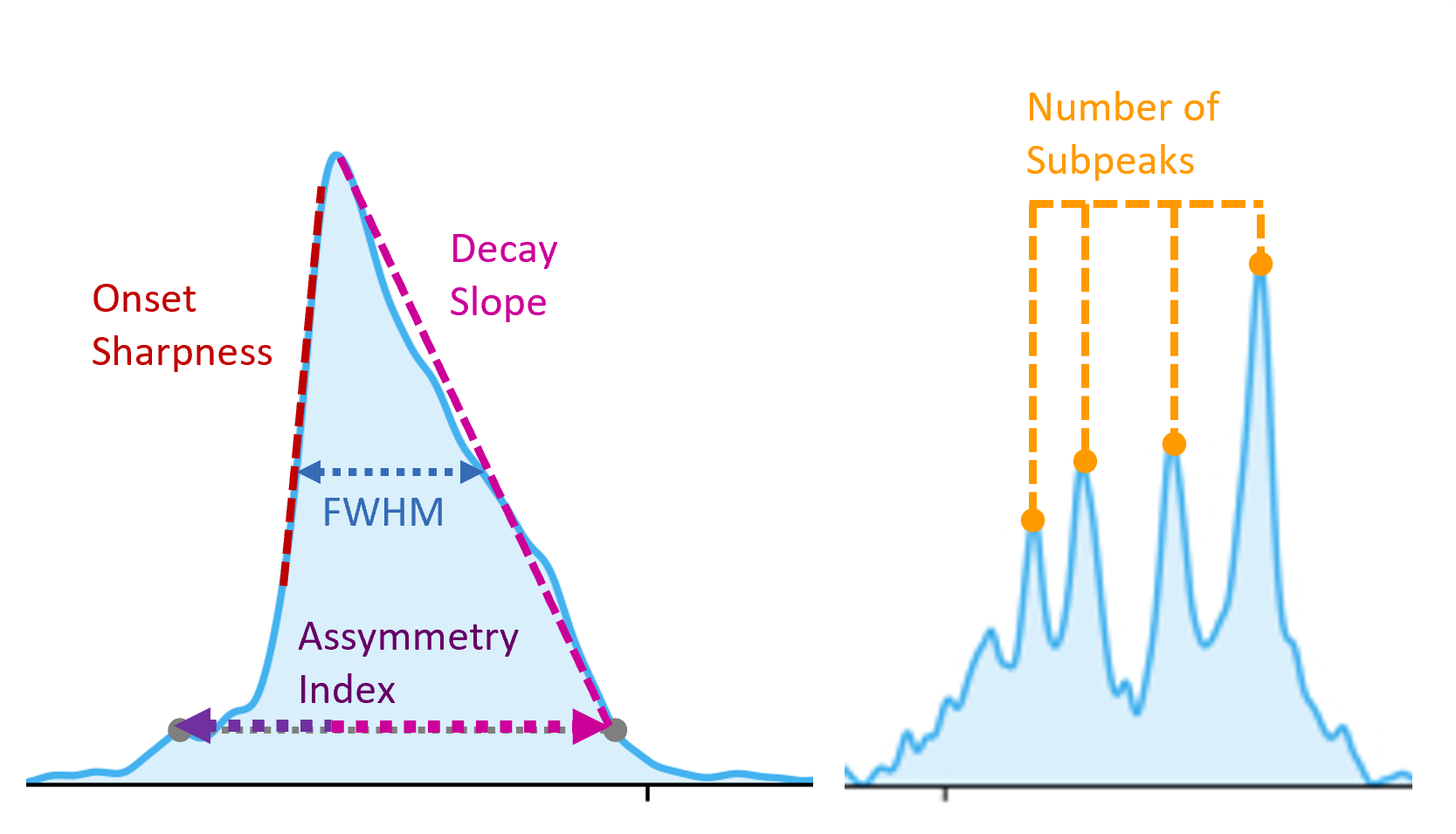
Gain a more complete characterization of network bursts through readouts that quantify the shape in detail. These finer descriptors uncover functional differences between conditions and phenotypes that standard metrics leave hidden. Designed to fully leverage the rich spatiotemporal information captured by HD-MEA recordings, this represents the first commercially available network burst shape analysis for MEA data.
Network Activity Dynamics
Characterize network behaviour beyond individual bursts.
Characterize neuronal population activity using sophisticated statistical methods that combine a synchronicity measure with a compact set of time-series features. Because it does not rely on network burst detection, it can be applied even when the network shows little or no synchronized bursting. The result is robust, comparable network-level characterization from the very first recording, providing a more complete functional profile of neuronal network activity than burst-based analysis alone.
Making Cardiac Research Easier
New Module: Cardiac Analysis
Turn cardiac recordings into a full functional profile.
The new Cardiac Analysis module characterizes cardiac activity across three dimensions: rhythm and regularity (frequency and beat-to-beat variability), propagation (where activity originates and how it travels), and waveform (field potential shape and duration). Together these metrics provide a comprehensive view of cardiac function for disease modeling, drug discovery, and cardiotoxicity studies.
.gif)
Simpler Analysis for High-Throughput Studies
Optimized Network Burst Detection
Consistent burst analysis, recording by recording.
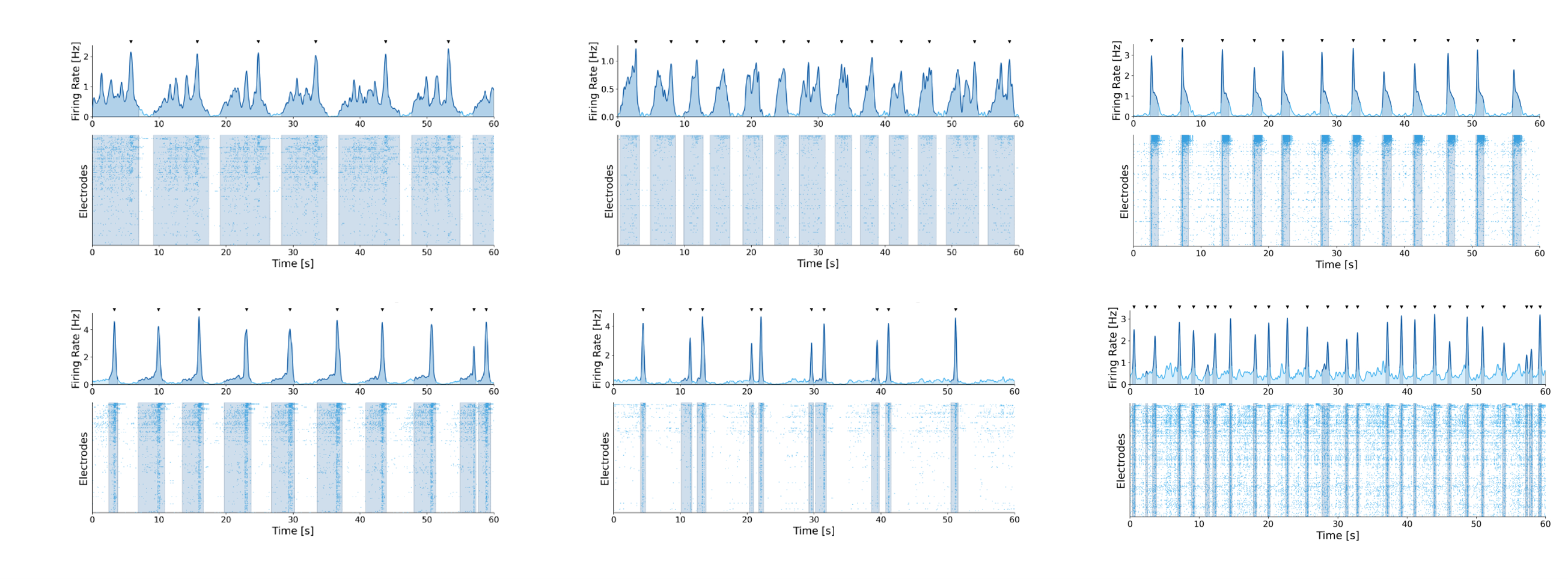
The improved Network Burst Detection automatically derives a key detection parameter from the recorded activity. This reduces manual setup and enables more consistent analysis across datasets with different activity profiles, supporting robust and reproducible high-throughput studies.
Tailored Metrics Export
Export your metrics your way, consistently, every time.
Create an export template tailored to your workflow and reuse it across every experiment. Save your preferred metrics, metadata, and layout as a reusable template to generate consistent XLS or CSV exports, ensuring reproducible downstream analysis across experiments. For longitudinal and multi-assay studies, exports are now grouped automatically by timepoint, providing a clear, comparable summary of metrics across the course of an experiment.
Together, these new analysis capabilities and workflow improvements help researchers extract more biological information from every recording while reducing manual work. From acquisition and visualization to advanced analysis, reporting, and export, MaxLab Live 26.1 will make it easier than ever to analyze, compare, and scale HD-MEA experiments, all within a single software platform. Coming soon!
Related
Resources
MaxLab Live
All-in-one Software

Our Technology
Multi-/Micro-electrode Arrays