A short 2025 Recap, Publications and Happy Holidays!
As we turn the final page on this year, December becomes our moment to reflect on the goals, and ambitions that drove us forward, while also looking ahead with renewed excitement at what comes next.
Looking back, we truly couldn’t have hoped for more (+), quite literally. This year marked exciting milestones, including the official launches of the MaxOne+ Chip and the MaxTwo 24-Well Plate+. Innovation also brought our community closer, through inspiring in-person moments at EXPO 2025 in Osaka and during our MxW Symposiums, where we caught exciting glimpses of the future together. Our collaborative efforts in grants opened the doors to new fascinating projects and already gave some fruitful results. These exchanges motivated us to give back through outreach activities and inspire the next generation.
What’s next? You’ll have to stay tuned as we’re keeping a few surprises under wraps.
Join us for a brief recap of what made 2025 such a memorable year!
In 2025, we went +
The MaxOne+ Chip and the MaxTwo 24-Well Plate+ are our newest solutions, designed to support everything from single-well studies to scalable parallel experiments. Here’s how a small “+” in the name delivers a big impact in the lab:
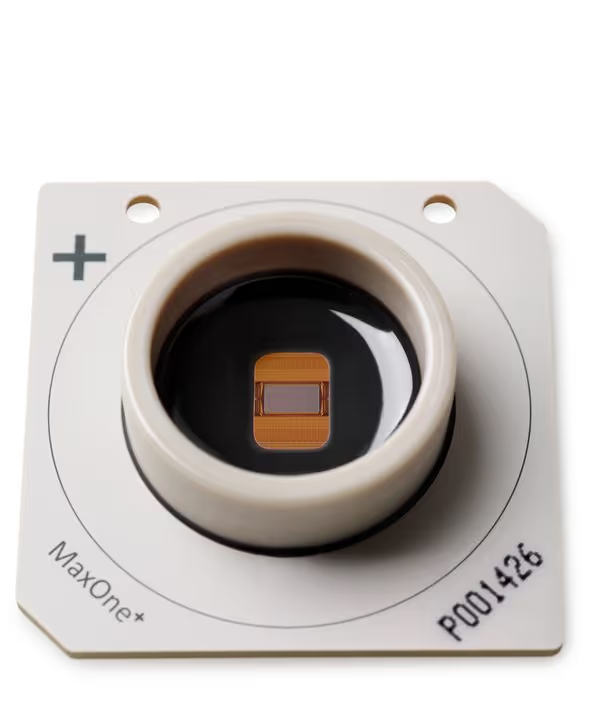
- Optimized surfaces: Exceptional biocompatibility with PEDOT coating, supporting reliable cell adhesion and robust longitudinal experiments.
- Lower noise: Ultra-sensitive electrodes for more precise recordings.
- Unique stimulation: Flexible recording combined with stimulation enables advanced network- and cell-level studies.
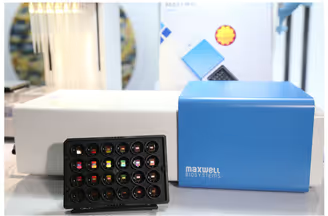
Parallel readout: Record from all wells simultaneously for faster, more efficient experiments with the MaxTwo 24-Well Plate+.
And looking ahead… Our MaxTwo system is now compatible with the upcoming 96-Well Plate!
EXPO 2025 Osaka
With the motto “Designing Future Society for Our Lives,” the world-renowned EXPO returned this year to Osaka, Japan. Spanning six months, it brought together exhibitors and curious visitors from around the globe, all seeking to better understand what can save, empower, and connect lives in the future.
We were honored to collaborate with Prof. Yoshiho Ikeuchi and Dr. Tomoya Duenki at the Swiss Pavilion, where they showcased their unique perspective on the EXPO subthemes. Their groundbreaking project, “Brain Neural Network on a Chip,” connected brain organoids, better known in their lab as Tomorganoids, with microelectrodes to track neural activity in real time. The system allows precise investigation of neural circuit function, disease-related disruption and therapeutic response, advancing how the human brain can be modeled and studied in vitro.
Presented as part of the “Life” exhibition (June 11–August 12, 2025), the project sparked inspiring discussions on the future of biocomputing, disease modeling, and drug discovery, marking an exciting step forward for neuroscience.
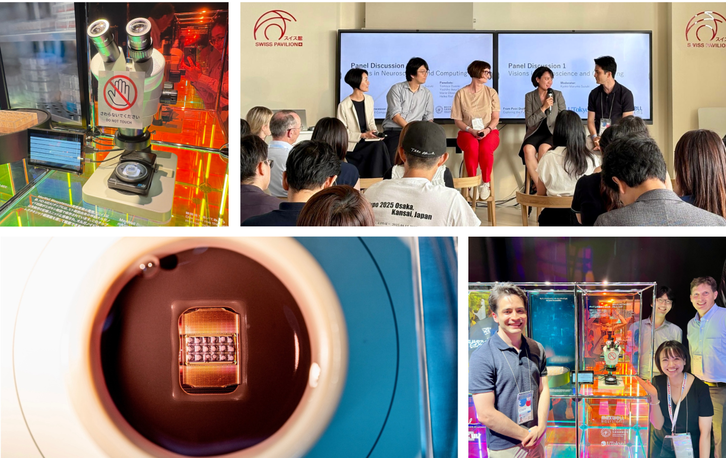
Beyond the exhibit, the Swiss Pavilion hosted two panel discussions on neuroscience, computing, and the long-lasting Swiss–Japan collaboration, highlighting how interdisciplinary partnerships drive real-world impact. Our CEO Dr. Urs Frey and our CCO Dr. Marie Obien shared MaxWell Biosystems’ journey from research at ETH Zurich and RIKEN to building the company in Switzerland.
We would like to warmly thank Prof. Ikeuchi and Dr. Duenki for the inspiring collaboration, as well as everyone who visited the Swiss Pavilion and engaged with the project. Your curiosity and enthusiasm made the exchange especially meaningful.
MxW Symposiums and MaxWell Biosystems USA, Inc. Grand Opening
The EXPO highlighted the importance of community, a value close to our hearts, and one we were especially keen to strengthen in 2025. Through our two MxW Symposiums, held this year in Vienna and Kyoto, we had the pleasure of welcoming leading experts from the neuroscience community. They shared cutting-edge research ranging from disease modeling to neurocomputing, while showcasing the power and versatility of our HD-MEA platforms.
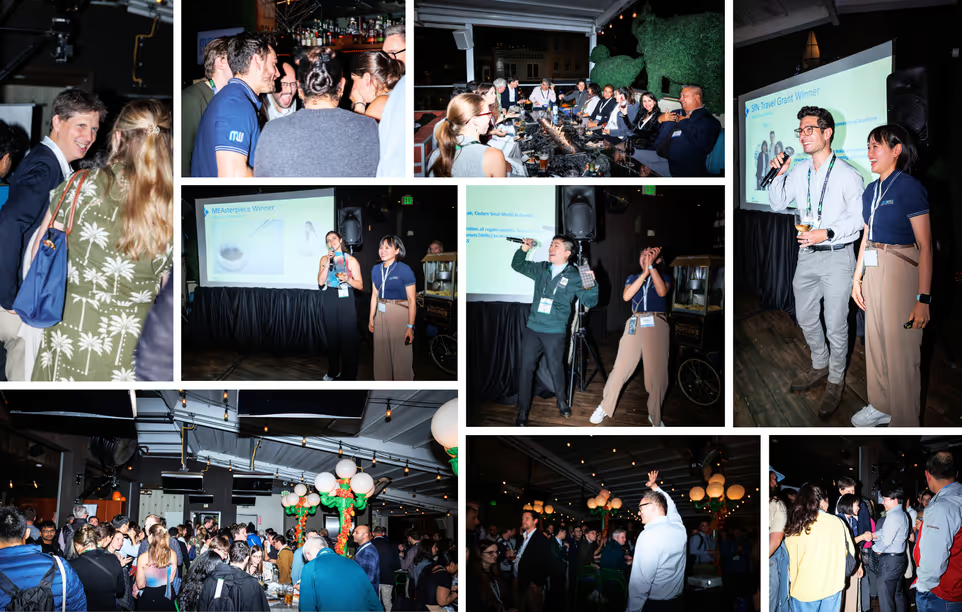
Our community also grew geographically this year with the opening of our MaxWell Biosystems USA, Inc. in the sunny San Diego. We were delighted to celebrate this milestone with many of you at our satellite event during SfN 2025. We shared insightful talks, laughter and even dancing while celebrating our Travel Grant and MEAsterpiece winners.
Advancing Innovation
The MO-SAIC project, funded through the Human Measurement Model grant by Health~Holland, NWO, ZonMw, and Samenwerkende GezondheidsFondsen, aims to advance personalized schizophrenia research by developing patient-derived midbrain organoids and evaluating antipsychotic responses. The consortium is coordinated by the MERLN Institute and brings together MHeNs at Maastricht University, Radboudumc, MeOmics Precision Medicine Ltd, and MaxWell Biosystems.
The Innosuisse – Innovate UK project has reached its halfway milestone, with results already exceeding expectations. By integrating epilepsy patient-derived assembloids with the high-resolution, high-throughput capabilities of the MaxTwo 24-Well Plate HD-MEA system, the project enables more predictive and human-relevant approaches to drug discovery. This work lays the foundation for next-generation pharmacological workflows with improved translational potential. The project is coordinated by Oxford StemTech, with consortium partners King’s College London and MaxWell Biosystems.
Beyond the Lab
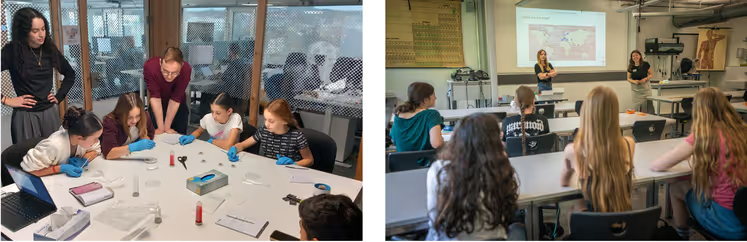
Having learned so much from our community this year, we wanted to give something back. We did so by taking part in charity initiatives supporting better treatments, as well as hands-on workshops designed to inspire the next generation, and especially young girls, to explore and join this fascinating field.
Our Webinars, On Replay
This year, our webinar series counted twelve insightful sessions, exploring a remarkable diversity of topics, sparking lively discussions, and connecting an international community of researchers and innovators. We were honored to welcome speakers from around the world, whose expertise and perspectives made each webinar both enriching and impactful.
We’re excited to share that replays of the recorded webinars featuring published work are now available on our website. Whether you’d like to revisit a particularly inspiring presentation or discover the content for the first time, we invite you to dive in and continue the conversations these webinars ignited.
Related
Resources
Preconfigured neuronal firing sequences in human brain organoids

A human striatal-midbrain assembloid model of alpha-synuclein propagation
Human neuron subtype programming via single-cell transcriptome-coupled patterning screens

Tellurium nanowire retinal nanoprosthesis improves vision in models of blindness
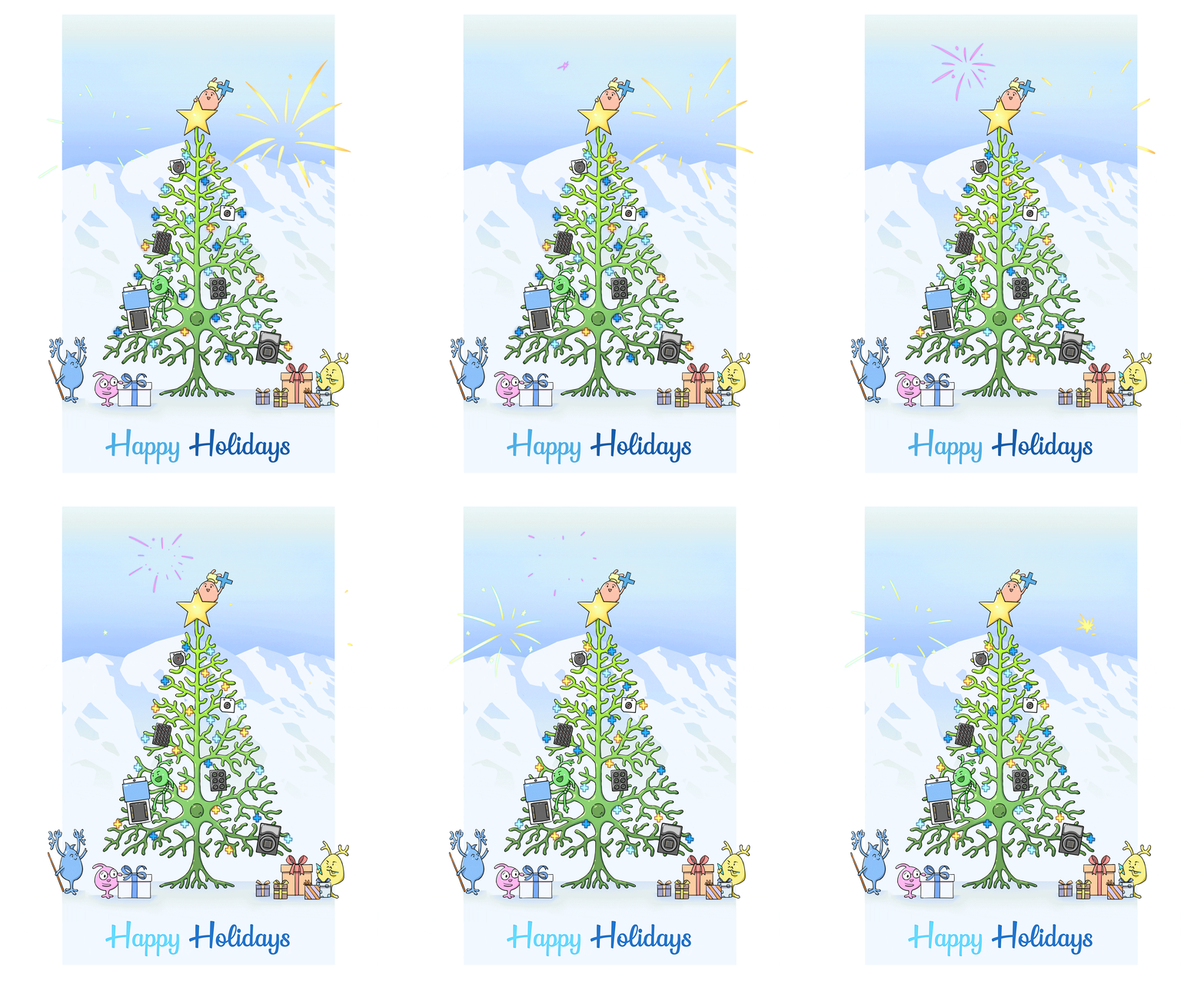
Happy Holidays!
As we close out this unforgettable year, we want to wish you a wonderful holiday season and thank you for being part of our community.
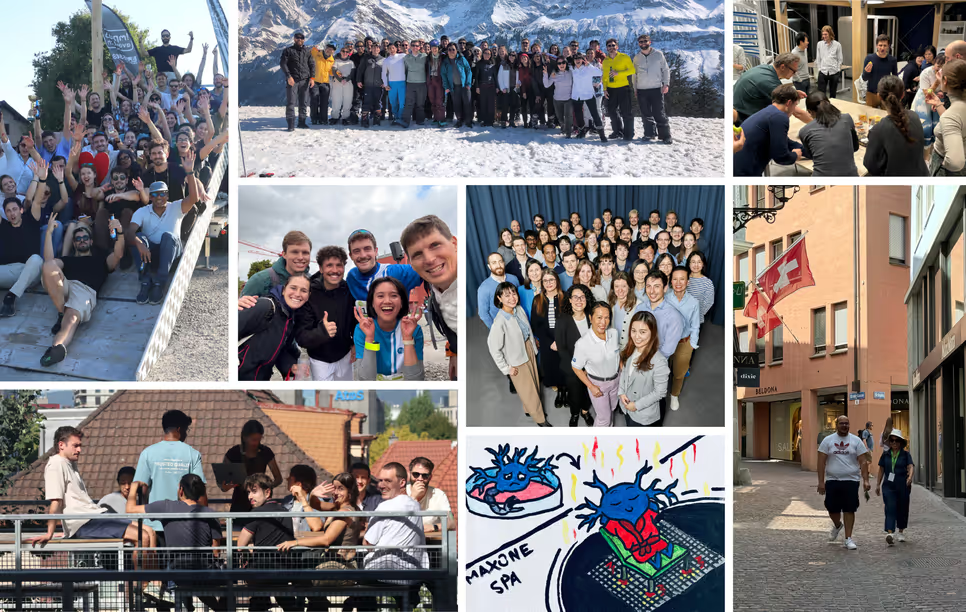
Curious to see where 2026 will take us? Follow us on Social Media!