Latest in Disease Modeling, Neurocomputing, Global Events and More
2026 is already moving fast, how is it going on your side? In this edition, we share content and updates designed to support your work: from application-driven best practices to hands-on workflows and new tools you can apply immediately. We spotlight two core application areas: Disease Modeling and Neurocomputing.
For Disease Modeling, we are highlighting recent scientific advances that make human neural models more biologically relevant, functionally informative, and easier to translate into decisions. This includes a Nature Custom Media webcast with Dr. Sandrine Da Cruz (VIB-KU Leuven) and Dr. Barbara Treutlein (ETH Zurich) exploring how integrated molecular and functional analysis are pushing the boundaries of what in vitro systems can tell us about human neural development and disease.
For Neurocomputing, we have published practical, ready-to-use resources to help you go from concept to execution, starting with a closed-loop experimentation tutorial and a webinar featuring three expert speakers from the Braingeneers team at UC Santa Cruz.
On the Technology side, we are sharing two important updates to make your workflows more powerful and efficient. First, an early preview of the cardiac analysis coming soon in our MaxLab Live software. Second, a new application note developed in collaboration with INTEGRA on semi-automated liquid handling to support reliable, higher-throughput workflows.
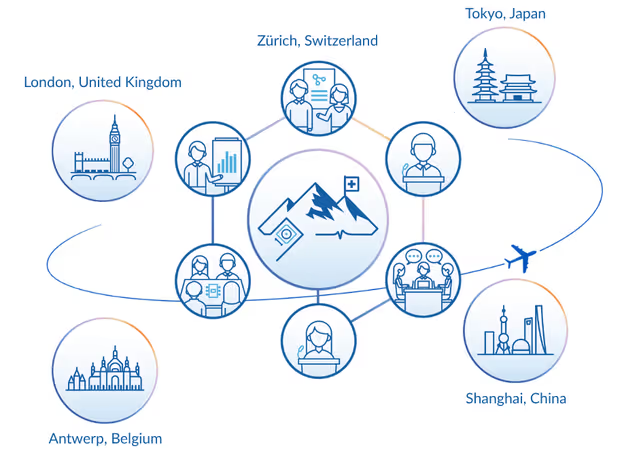
Also, our Global Event Series kicks off soon, with several stops across the world. These are science-first gatherings designed to bring together discoveries, methods, and community learnings, and a chance to connect in person with peers working on the same challenges. Watch for your region, or meet us in Zurich.
Finally, we have rounded up the latest publications from the community: worth a look before you go! And stay until the end: Buzz makes a special appearance this time.
Disease Modeling: Driving Innovation in Human Neural Models
Human neuronal models are improving quickly. However, key challenges remain: generating the right neuron subtypes, capturing meaningful functional phenotypes, and linking molecular changes to cell behavior.
In this upcoming Nature Custom Media webcast, Dr. Sandrine Da Cruz and Dr. Barbara Treutlein will share complementary approaches to address these gaps. They will cover spatial transcriptomics and functional approaches revealing subcellular RNA localization and axonal vulnerability, as well as systematic patterning strategies that expand the diversity and biological relevance of human neurons grown in vitro. Together, these methods offer new ways to improve human neural disease models.

Neurocomputing: Closed-Loop Experiments, Made Practical
Closed-loop experiments are becoming increasingly popular, but how are they actually implemented? If your team is building one, seeing a well-designed workflow in action makes all the difference.
Start here: our Getting Started tutorial on closed-loop experiments with HD-MEAs. It walks you through every stage, from initial setup to a fully reproducible, functional experiment, so that your first run won’t be a guessing game.
We also recently hosted our first webinar on this topic, featuring speakers from the Mostajo-Radji Lab and Teodorescu Lab (University of California, Santa Cruz). Dr. Ash Robbins, Hunter E. Schweiger, and Sebastian Hernandez discussed how brain organoids self-organize into distinct network architectures, and how they can achieve goal-directed learning in a closed-loop system. They also provided hands-on tips for running these workflows on MaxOne.
Missed the live session? The replay is coming soon. Get in touch to be notified when it goes live.

Coming Soon: Cardiac Analysis in MaxLab Live
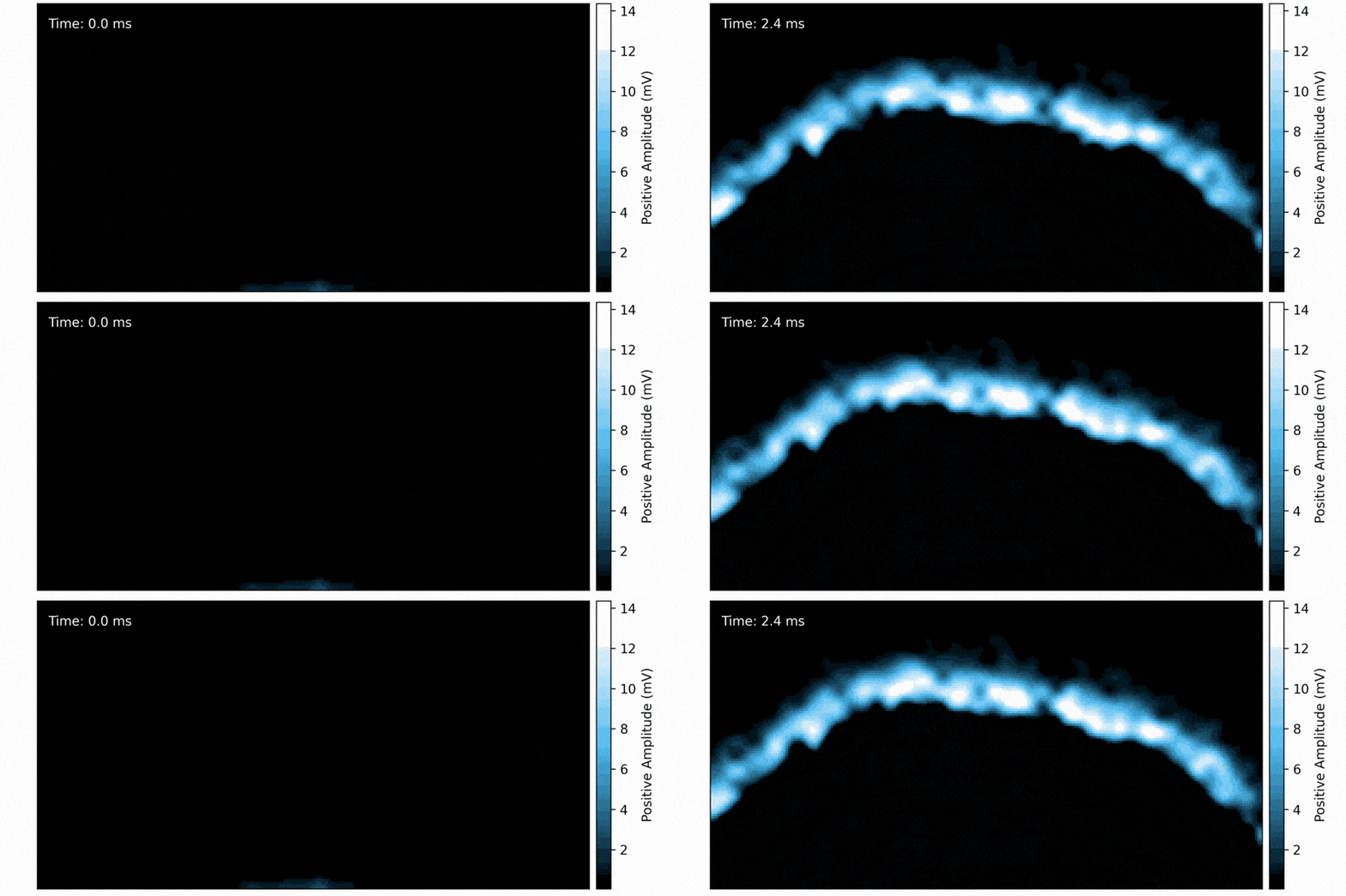
Cardiac cells produce strong, high-amplitude signals that can be reliably recorded across our high-density MEA platforms, but a clean signal is only the starting point. While capturing cardiac beats is straightforward, spatial dynamics and subtle compound-induced changes reveal deeper functional insights across both 2D cultures and spheroids.
Teams working with cardiac models consistently come back to the same questions:
- Are beats stable over time, or is the rhythm drifting?
- Where does each beat originate? Is it shifting with compounds added?
- How does activity propagate across the sample?
These are not just technical details. Subtle shifts in rhythm stability, pacemaker location, or propagation patterns can be early indicators of meaningful functional change. This is what matters for disease modeling, drug screening, and safety assessment.
Our upcoming Cardiac Analysis module in MaxLab Live automatically captures activity patterns, from beat-to-beat variability to spatiotemporal dynamics, so your team can turn complex data into clear biological insights for faster, confident decisions.
Automation Solutions: Parallel Liquid Handling for MaxTwo 24-Well Plates
Compound screening demands a lot from a workflow: reproducibility, throughput, and high-resolution readouts, all at once, and without sacrificing data quality at any step.
MaxTwo’s Multi-Well HD-MEA System is built for exacly this context, enabling scalable, real-time, label-free recordings from electrogenic models, including iPSC-derived neuronal cultures and organoids. In our new application note with INTEGRA, we showcase a semi-automated, parallel liquid handling workflow for the MaxTwo 24-Well Plate using the VIAFLO 96 handheld electronic pipette. It covers routine but critical steps such as media changes, cell plating, and compound addition.
The result: less hands-on time, more consistent execution, and more reliable comparisons across wells and experiments.
Global Event Series 2026: Join the Conversation
Across 2026, we are bringing together researchers working at the forefront of HD-MEA technology, functional characterization of neuronal networks, and next-generation in vitro models, from neurodevelopment and disease modeling to neurocomputing and beyond.
Each event is designed around what actually makes time away from the bench worth it: practical takeaways you can apply right back, open discussion of protocols and applications, and meaningful connections with the people currently shaping the field. Select sessions will also feature unpublished work, so you can hear the latest results before they appear in print. Whether you are deep in HD-MEA workflows or exploring where the technology could take your research next, there is a place for you at these events.
MaxWellers on the Road
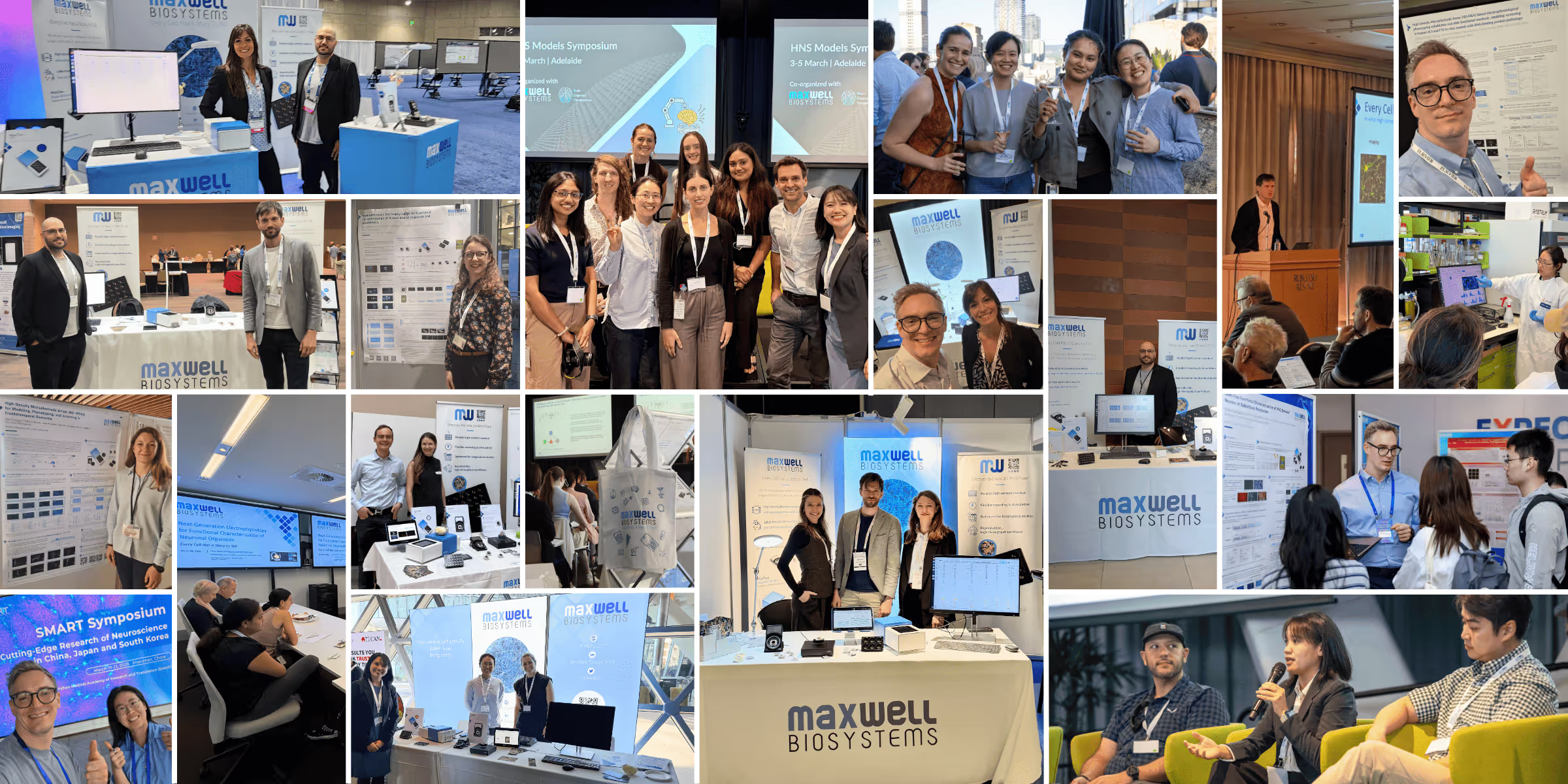
March and April kept the pace up, across regions, disciplines, and research cultures that do not always get to be in the same room together.
We started in Australia at the HNS Symposium, where clinical translation was front and center. It was energizing to see teams actively pushing models and methods toward outcomes that matter beyond the bench.
From there, one question followed us through Europe, Japan, and the US: “How do you move from a compelling result to something clinically meaningful?”
At iPSZurich, the discussion returned to fundamentals: reproducibility and scalability as preconditions for everything else. At MPS, the focus sharpened around a core idea: function starts at the membrane, and strong readouts start with strong experimental design. From there, the lens widened: ASN 2026 and NeuroWinter Summit explored network-level questions, while OrganoidNL brought in developmental perspectives. We ended this stretch with events focused on disease modeling and drug screening, bringing the discussion back to clinical relevance, and to the value of collaboration across disciplines.
One theme ran through all of it: the field is asking harder questions and finding better ways to answer them.
We are excited to see what May and June have in store. More soon.
Related
Resources
Loss of schizophrenia risk gene XPO7 disrupts neuronal excitability and network regularity via altered Na+ channel dynamics in human neurons
An integrated in vitro platform and biophysical modeling approach for studying synaptic transmission in isolated neuronal pairs

Online supervised learning of temporal patterns in biological neural networks under feedback control

Establishing mouse forebrain organoids as models of intrinsic cortical network assembly

A fast and simple algorithm for accurate spike detection in HD-MEA recordings
Every Cell Has a Story to Tell
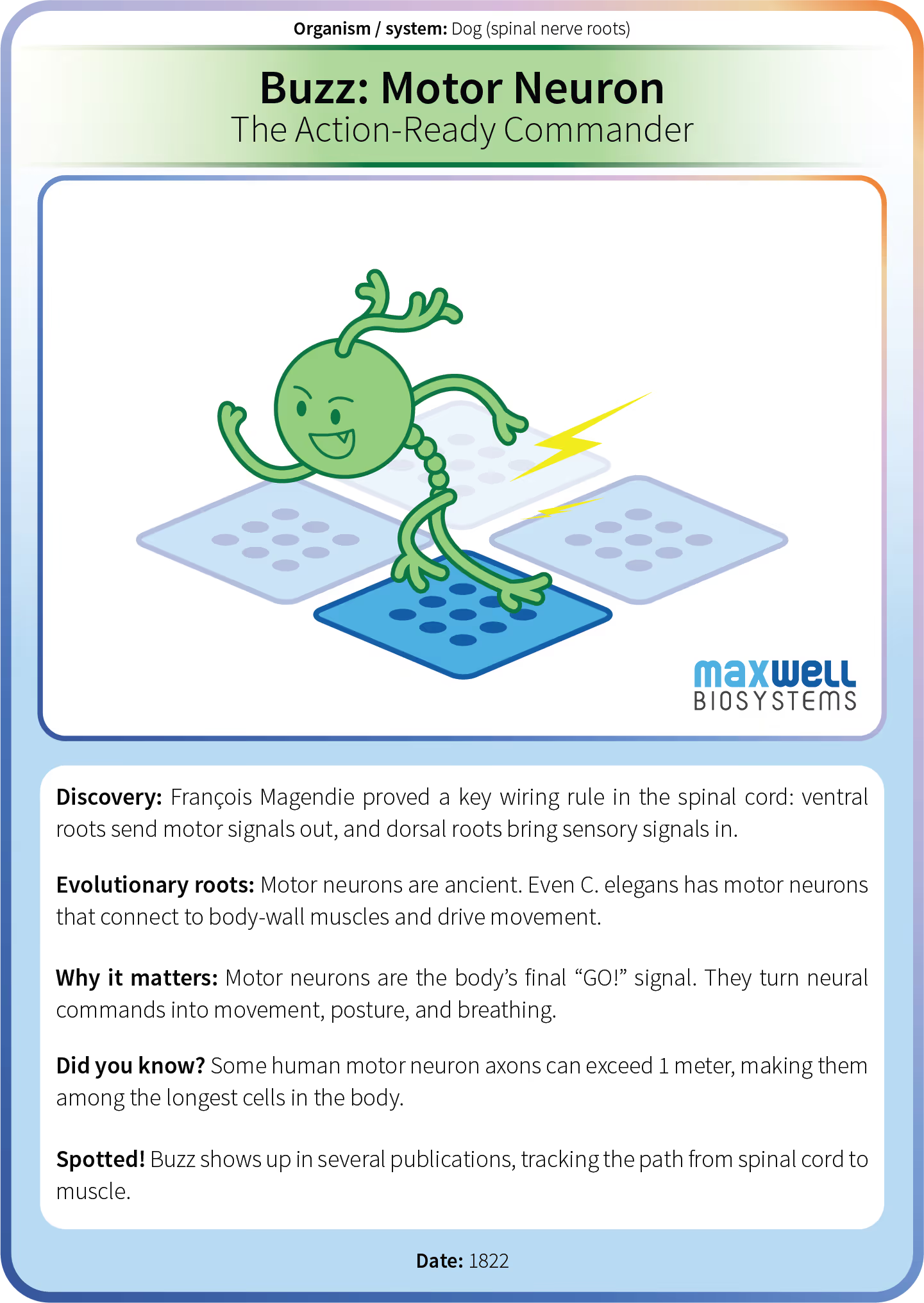
Say hello to Buzz, our resident motor neuron: energetic, lively, and built to deliver results fast.
Buzz is the one who turns decisions into action. When the brain has a plan, lower motor neurons carry the message from the spinal cord all the way to the muscles, sometimes across astonishing distances, so muscles contract, movements happen, and the body stays responsive.
He is proud of his iconic shape (yes, that long axon). It is not just for show: it is the biological express lane that helps signals reach the right place at the right time. Buzz may be plush-sized, but his attitude is big, and his role is essential.
Stay tuned for the next story. Who will you meet next?