10 years of Innovations. A Summer of New Connections and Launches
This year, MaxWell Biosystems celebrates a special milestone: our 10th anniversary. For the past decade, innovation has been driven not only by the technologies we have built, but also by the discoveries researchers have made using them. Together with our community, we have helped advance neuroscience, disease modeling, and drug discovery. As we look ahead, we are excited to continue enabling the next generation of breakthroughs. In this newsletter, you will discover opportunities to connect with the community, explore new scientific resources, and learn about our latest innovations.
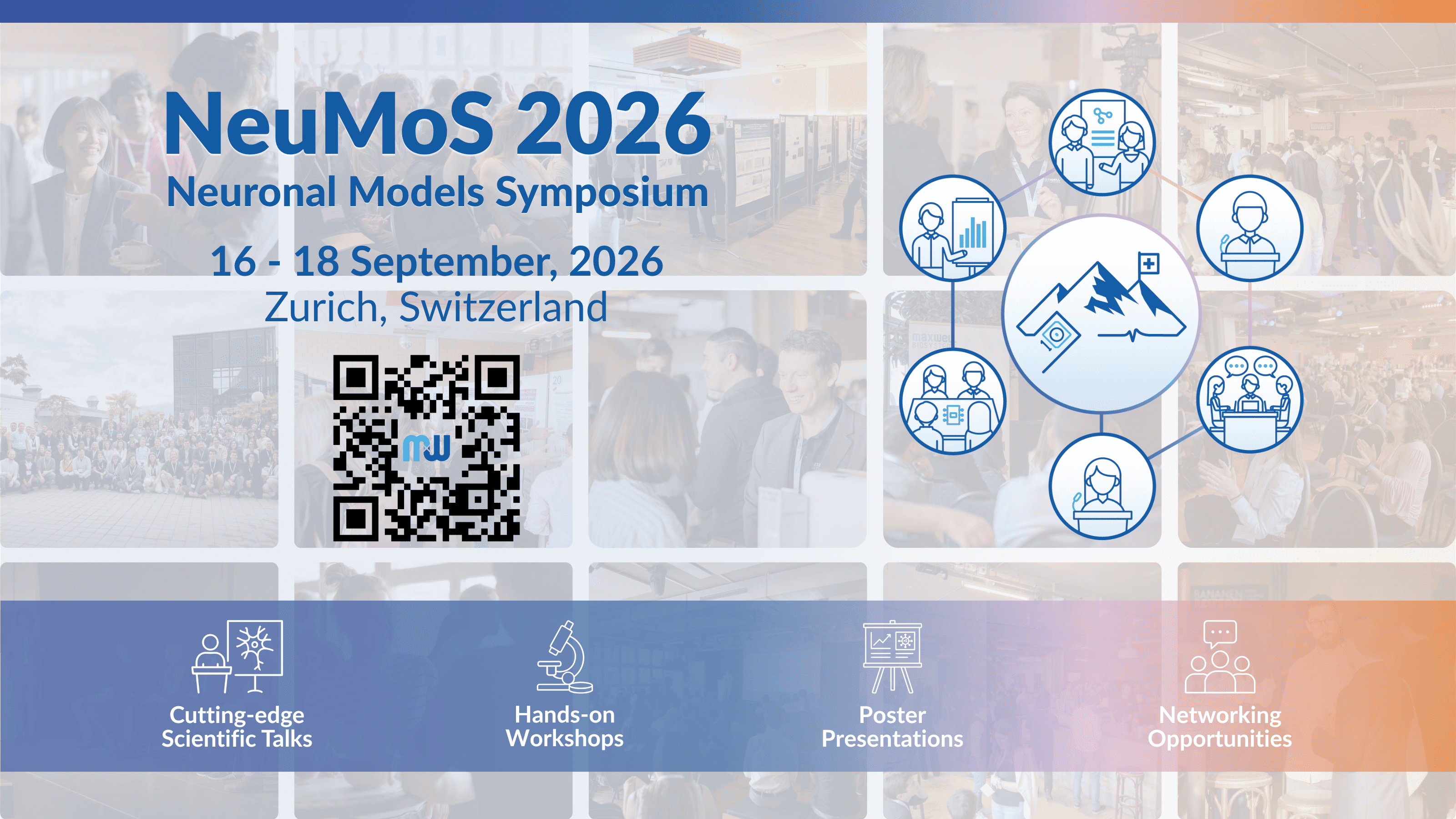
First, mark your calendar for NeuMoS 2026, where leading researchers will come together to discuss organoids, new approach methodologies (NAMs), and neural circuit assays for disease and drug discovery. If you’d like to present your research or take advantage of early-bird pricing, hurry up! And, plan to stay with us a little longer: immediately following the Symposium, we'd love to celebrate our journey together with you at our 10-Year Open House in Zurich.
Curious about what is next in neuroscience? Our latest scientific resources feature expert perspectives on how human neural models are advancing development and disease research, and how engineered neuronal networks are opening new possibilities for biological computing through high-content electrophysiology. Alongside the webinar recordings, you'll also find expert answers to audience questions and additional resources to continue exploring these rapidly evolving topics.
We are also expanding the MaxWell Biosystems ecosystem with new tools designed to make your research even more powerful. Explore the latest MaxLab Live analysis capabilities for revealing functional phenotypes beyond conventional MEA analysis, discover practical accessories that simplify everyday workflows, and take a first look at the new MaxTwo 96-Well Plate+, bringing high-resolution electrophysiology to larger-scale experiments.
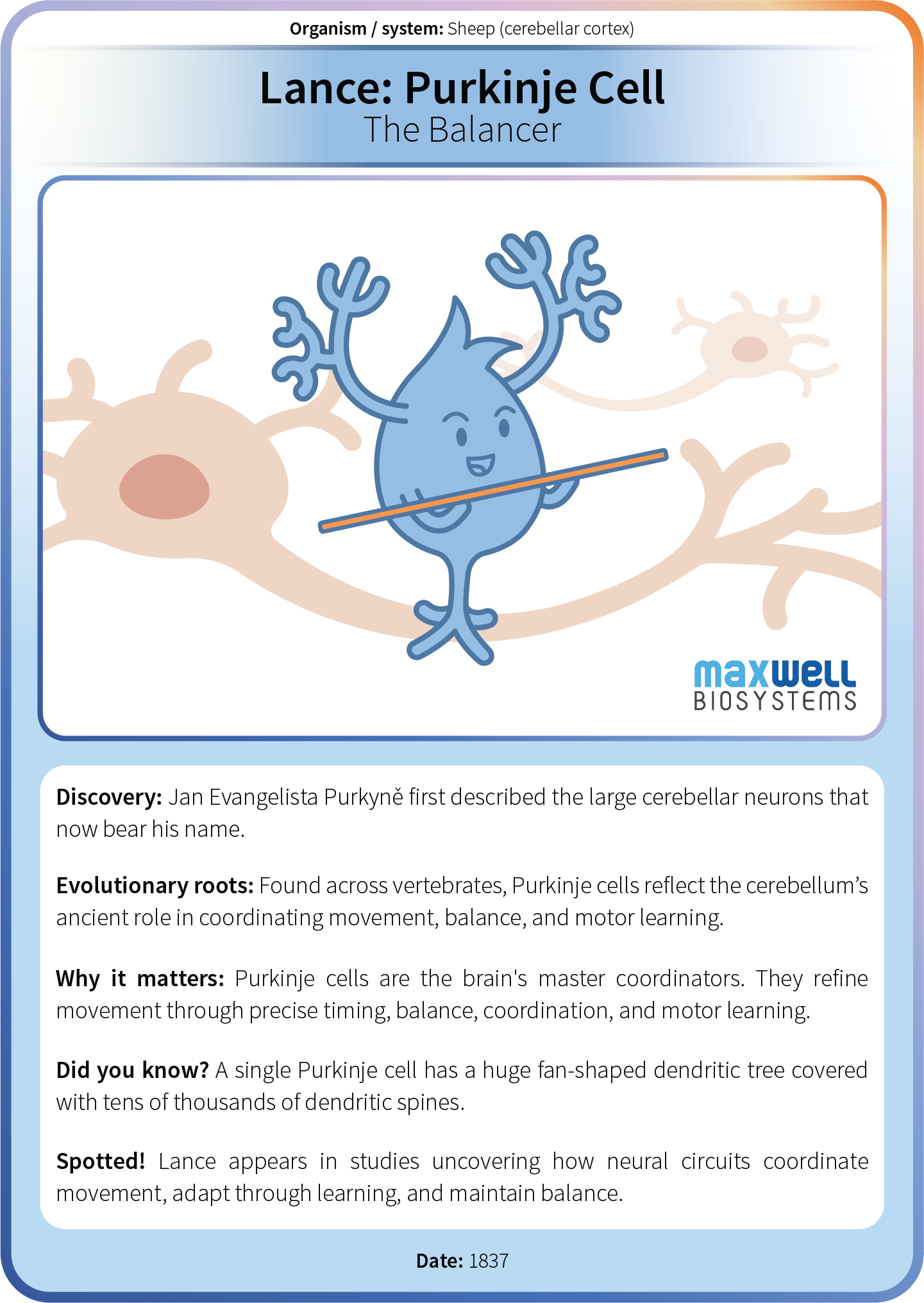
Before you go, do not miss the highlights from our recent conferences and MaxWell events around the world, browse the latest publications from the community, and the newest chapter of our Every Cell Has a Story to Tell series, featuring Lance, the cerebellar Purkinje cell who keeps everything in perfect balance.
Join the Neuronal Models Symposium 2026
From September 16–18 in Zurich, NeuMoS 2026 will bring together leading researchers in organoids, new approach methodologies (NAMs), neural circuit assays, disease modeling, drug discovery, and biocomputing.
New this year, a dedicated half-day of interactive workshops will give participants the opportunity to learn directly from experts through practical sessions on microfluidic patterning, spike sorting with open-source AI, closed-loop stimulation, and organoid plating on HD-MEAs. Whether you're looking to discover the latest science, build new collaborations, or develop practical skills you can bring back to your lab, NeuMoS 2026 offers a unique opportunity to do it all.
Early-career researchers: need support to attend? Apply for our Travel Grant of up to €2,000. In addition, showcase your research by submitting a short talk or poster abstract for the chance to receive one of two €500 Best Poster Awards.
Explore Our Latest Webinar Replays
Driving Innovation in Human Neural Models: Now On Demand
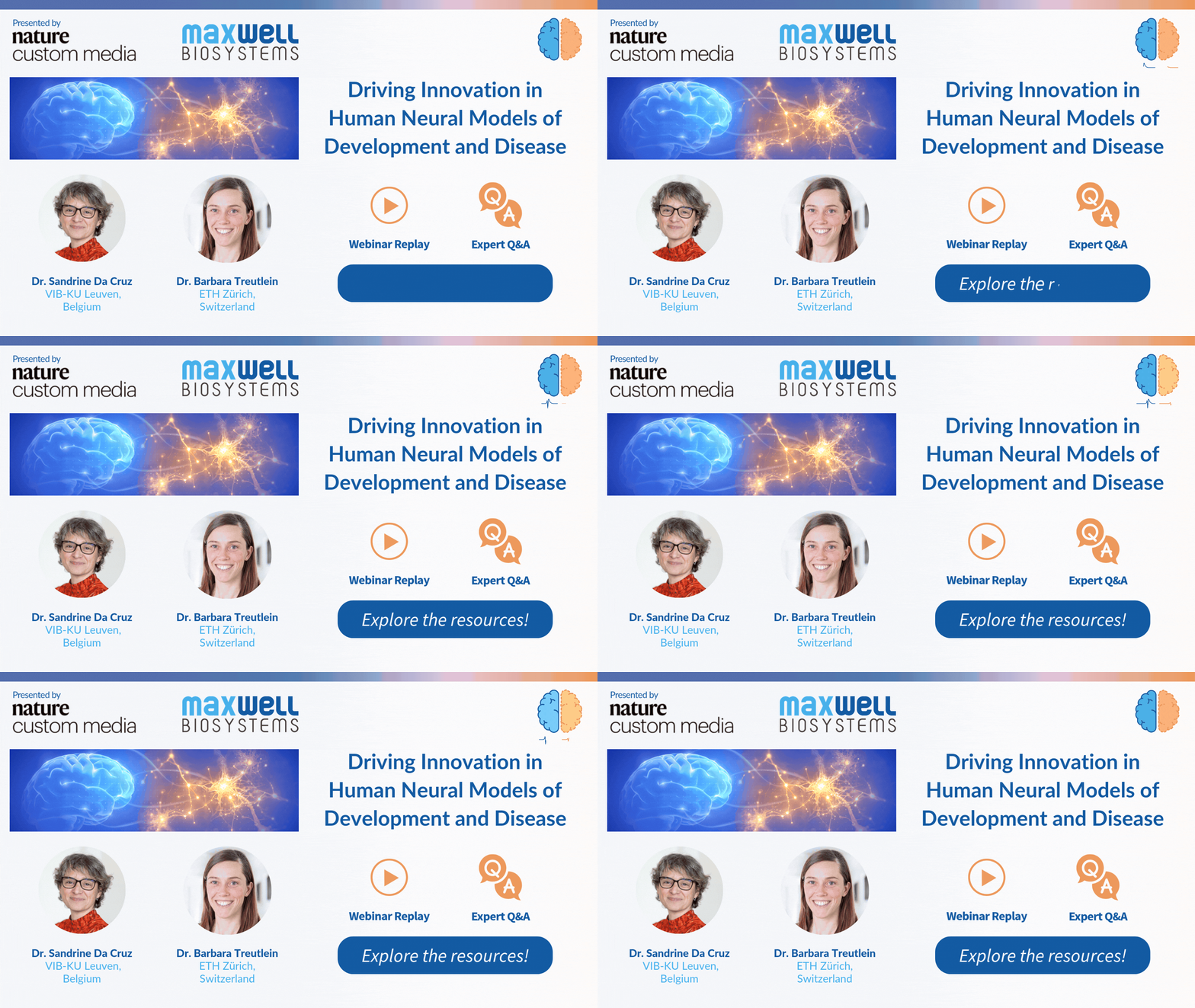
In our recent webinar, hosted in partnership with Nature Custom Media, Dr. Sandrine Da Cruz and Dr. Barbara Treutlein explored how advanced human neural models and high-content electrophysiology are expanding our understanding of development, disease and therapeutic discovery.
If you missed the live session, or you’d like to revisit the discussion, you can now watch the full webinar on demand. We have also included expert answers to the audience about questions that couldn't be covered during the live event, along with additional resources to help you explore the topic further.
Neuronal Networks as Biological Computing Systems
Understanding how neuronal networks organize, communicate, and process information is central to advancing neurocomputing. During the webinar, Prof. Hideaki Yamamoto demonstrated how engineered neuronal networks, combined with HD-MEA, can reveal network dynamics, connectivity, and computational behavior.
Watch the webinar replay to discover how these approaches are opening new possibilities for neurocomputing and browse through the audience Q&A for additional insights. Prof. Yamamoto will also join us as a speaker at NeuMoS 2026, offering another opportunity to explore this topic and connect with him in person.

Celebrate 10 Years of MaxWell Biosystems
For the past 10 years, MaxWell Biosystems has had the privilege of working alongside a global community of researchers, collaborators, and partners who continue to push the boundaries of neuroscience.
To celebrate this milestone, we warmly invite you to our 10-Year Open House at our headquarters in Zurich. Join us as we reflect on a decade of shared achievements, meet the people behind the technology, and look ahead to what is next. Taking place immediately after NeuMoS 2026, the Open House is an ideal opportunity for symposium attendees to extend their visit, but the celebration is open to everyone who has been part of our journey.
Reveal More From Every Recording
MaxLab Live, our all-in-one software platform for high-content electrophysiology, now offers expanded analysis capabilities for both neuronal and cardiac models.
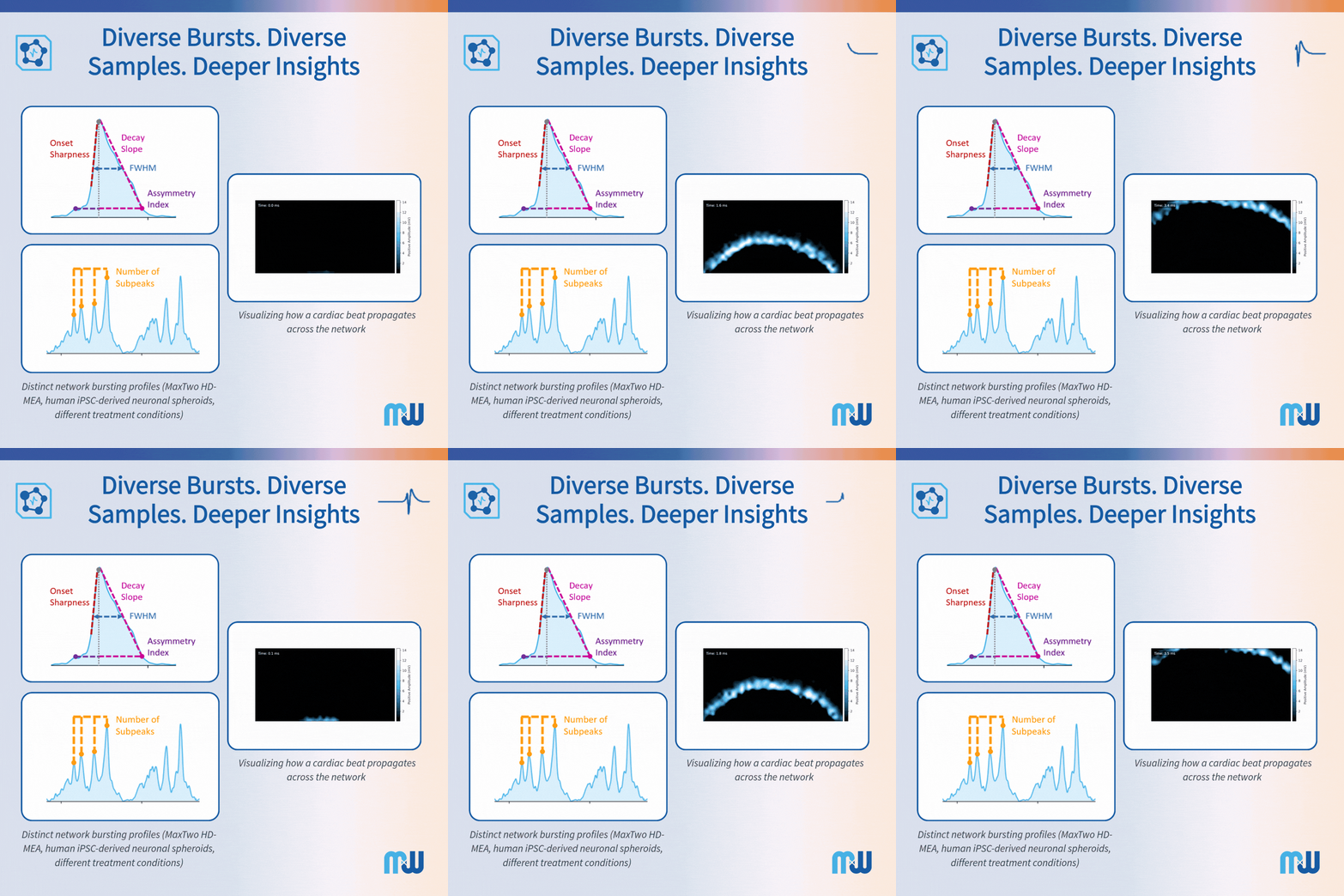
For neuronal networks, Network Burst Shape Metrics is the first-of-its-kind solution to characterize the complete shape of network bursts, including superburst detection, revealing functional phenotypes that conventional burst metrics can overlook. Network Activity Dynamics complements this by capturing changes in population activity and temporal network behavior that standard network analyses often miss, providing a richer understanding of neuronal function. For cardiac applications, the new Cardiac Analysis module extends beyond beat detection to provide comprehensive insights into rhythm, propagation, and waveform characteristics.
All together, these parameter-free workflows, and customizable metric exports help researchers extract more biological information from every HD-MEA recording.
Small Tools. Big Difference.
The biggest improvements can come from the smallest innovations. Our newest accessories are designed to streamline everyday workflows, from achieving more consistent dot plating to simplifying organoid handling. By reducing variability and standardizing sample preparation, these tools lay the foundation for reliable, reproducible experiments across larger number of samples.

Introducing the MaxTwo 96-Well Plate+
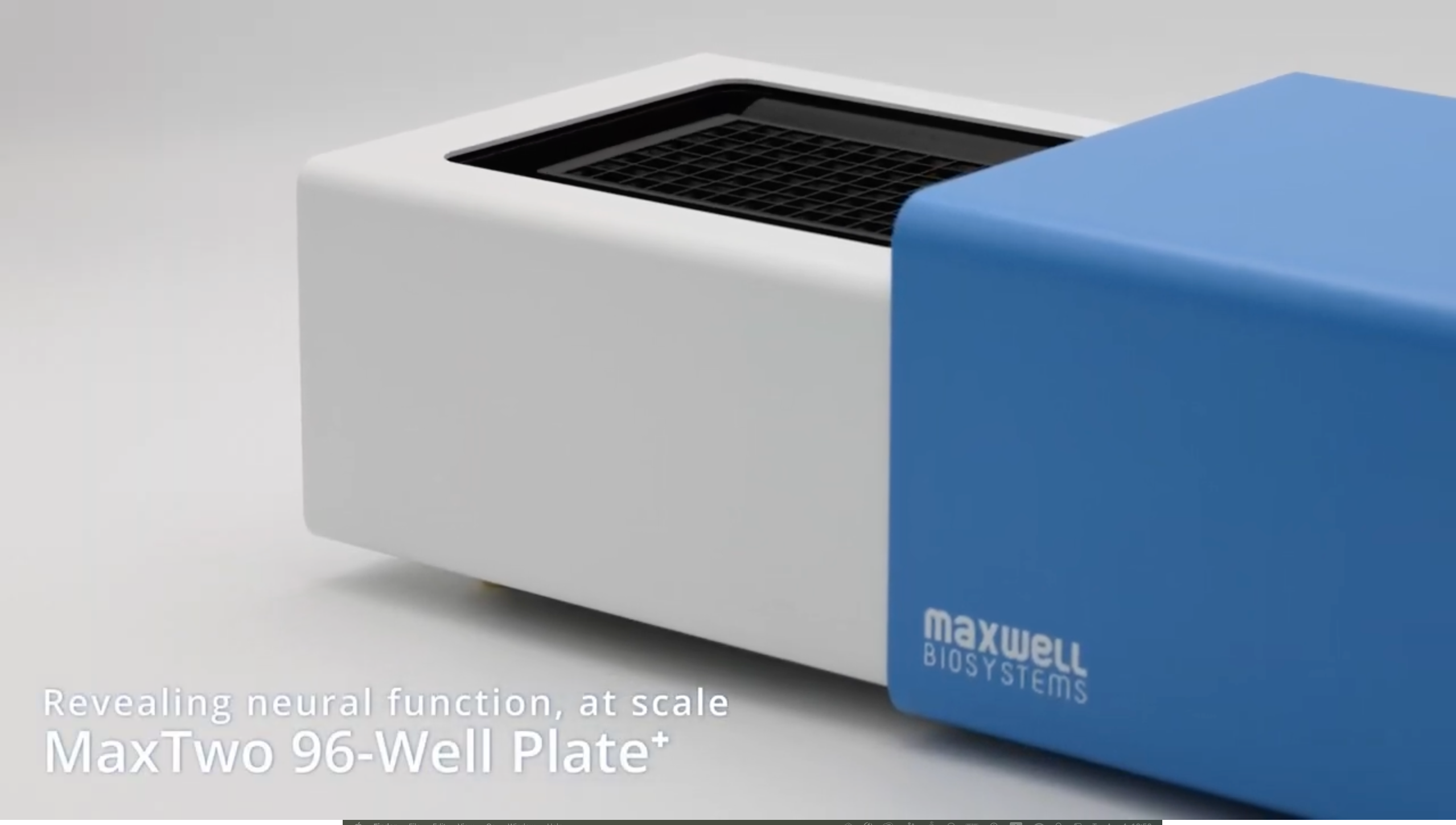
The MaxTwo HD-MEA System is expanding to support higher-throughput electrophysiology. The new MaxTwo 96-Well Plate+ combines parallel recording and stimulation across 96 wells while preserving the high resolution and low noise of MaxWell Biosystems HD-MEA technology.
Built for scalable neuroscience and drug discovery workflows, it integrates seamlessly with our software and automation solutions, bringing acquisition, analysis, and automated handling together in a single platform.
Related
Resources
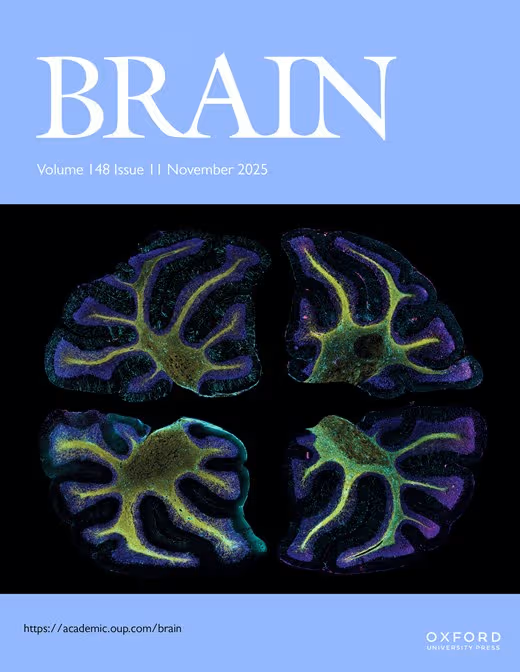
Kv7.2 loss-of-function causes early hyperexcitability and network remodelling
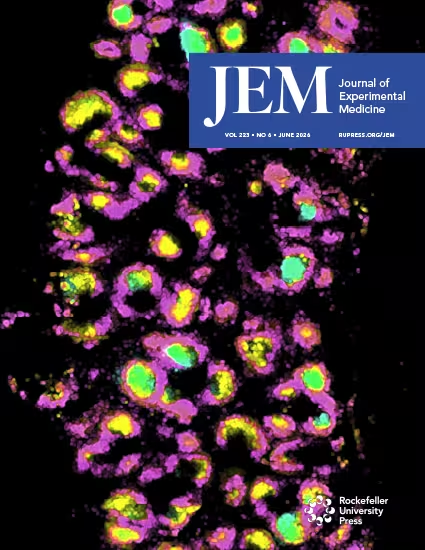
Identification of secondary microglial formation centers in the human fetal brain
Defective ventral neurogenesis due to midfetal Chd8 mutation drives autistic-like behavior in mice

Engineering Neuronal Network Connectivity Through Precise and Scalable Electrical Modulation

Every Cell Has a Story to Tell
Lance isn't the one telling your muscles to move, that's Buzz's job. Instead, he makes sure every movement is coordinated, balanced, and precise. Whether you're learning to ride a bike, catching a ball, or simply walking down the street, Lance is constantly refining motor commands, helping your brain correct errors and improve performance over time.
His trusty staff is more than an accessory. Just like a real Purkinje cell—the master integrator of the cerebellum—Lance gathers information from across the brain, weighs every signal, and delivers the finely tuned output that keeps movement smooth and controlled. He rarely seeks the spotlight, but without him, even the simplest actions would become clumsy, unsteady, and difficult to master.
Stay tuned for the next story. Who will you meet next?