Inaugural International Conference on Organoid Intelligence (ICOI)

Date & Time

26-27 October, 2026

Location

Washington, DC

Tags

Organoids
Biocomputing
Pharmacology & Toxicology
Disease Modeling

Organoid Intelligence (OI) is opening exciting new possibilities at the intersection of neuroscience, bioengineering, and computing. By integrating human brain organoids with advanced technologies for recording and analyzing neuronal activity, this emerging field seeks to deepen our understanding of how neural networks develop, adapt, and process information. Beyond its potential to advance disease modeling and drug discovery, OI is also paving the way for innovative approaches to biological computing and the development of next-generation computational systems. As interest in this rapidly evolving field continues to grow, interdisciplinary collaboration is essential to address scientific and technological challenges, explore new applications, and ensure responsible innovation. At MaxWell Biosystems, we are excited to be part of this journey, connecting with researchers and innovators who are shaping the future of Organoid Intelligence. Through our High-Density Microelectrode Array (HD-MEA) technology, we aim to support the exploration of complex neuronal activity and network dynamics, providing valuable functional insights into brain organoids and contributing to the development of new applications at the interface of biology and technology.
Meet the MxW Team

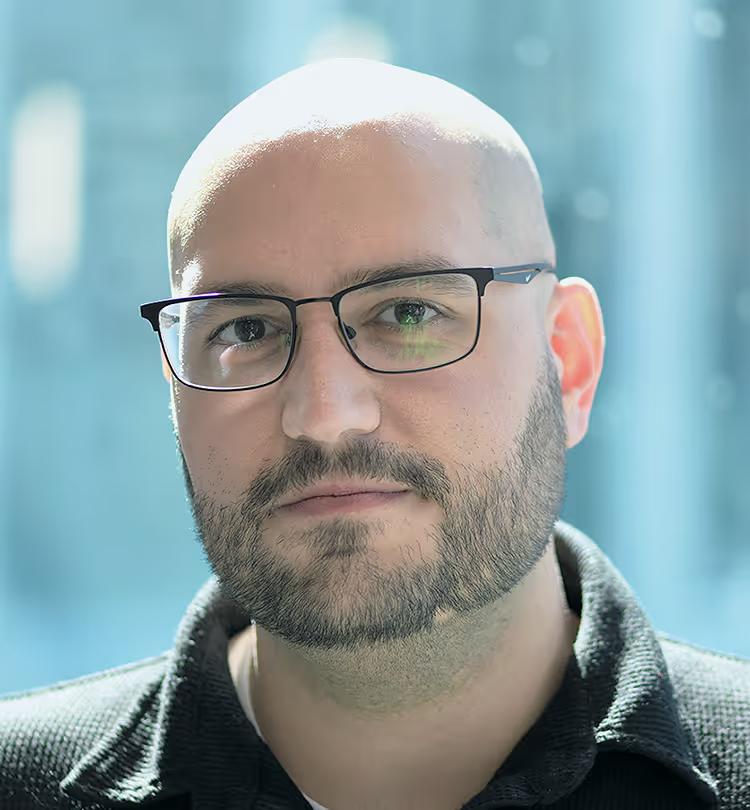
Elvira Guella

Account Manager | MaxWell Biosystems (Switzerland)

Dr. Carlos Sanchez Priego

Field Application Scientist | MaxWell Biosystems (Switzerland)

MxW Booth

Come visit us at booth to find out how MaxWell Biosystems supports organoid intelligence, delivering high-resolution insights and quality data you can trust. Stop by to connect with the team, explore what is new, and get a glimpse of what is coming next.

Poster
Presentations

Elvira Guella

Account Manager | MaxWell Biosystems (Switzerland)
High-density Microelectrode Arrays (HD-MEAs) for Multiscale Functional Interfacing with Neural Organoids

Abstract

Progress toward organoid intelligence requires interfaces capable of resolving the functional dynamics of complex 3D neural systems across spatial and temporal scales, while supporting longitudinal and scalable experimentation. High-density microelectrode arrays (HD-MEAs) provide a non-invasive interface between neural organoids and quantitative electrophysiology by combining dense spatial sampling with network-level and subcellular functional readouts.

Here, we used the MaxTwo multi-well HD-MEA system to longitudinally characterize human iPSC - derived midbrain organoids as a representative 3D neural model. Organoids were plated at approximately 77 days of age onto 24-well HD-MEA plates containing 26,400 electrodes per well and monitored for approximately one month. High resolution activity scans revealed progressive increases in firing rate, spike amplitude, and active area. Network recordings captured increasingly organized synchronized bursting, with increased burst cadence and neuronal recruitment over time. Acute 4-aminopyridine and tetrodotoxin treatment produced rapid and reproducible bidirectional modulation of activity, demonstrating sensitivity to functional perturbation. At a finer spatial scale, the AxonTracking assay enabled label-free reconstruction of soma-to-axon propagation patterns at the organoid–electrode interface, extending phenotyping from population dynamics to axonal function.

In this study, HD-MEAs were primarily used as high-content recording interfaces. However, the broader technology ecosystem also supports electrical stimulation and programmable control through the MaxLab Live API, enabling more interactive and potentially closed-loop paradigms. In parallel, PDMS application-ready technology enhances compatibility with microphysiological systems (MPS), enabling engineered microenvironments, microfluidics, and more spatially organized tissue architectures. Together, these capabilities position HD-MEA technology as an enabling interface for organoid-based experimentation, resolving maturation and perturbation across functional scales while providing the recording, stimulation, and integration framework needed for future closed-loop investigation of adaptive neural dynamics.

‍

Biography

Workshops

26 October | 9-11 AM
Neuronal Networks in Action: Exploring Organoid Intelligence with HD-MEAs

Discover how High-Density Microelectrode Array (HD-MEA) technology enables researchers to record, visualize, and stimulate neuronal networks with exceptional spatial and temporal resolution.

In this interactive 20-minute workshop, participants will experience live recordings of neuronal activity and explore MaxWell Biosystems’ MaxLab Live software through a guided demonstration. Learn how to identify active neurons, investigate network dynamics, analyze activity at single-cell resolution, and configure targeted electrical stimulation.

Through practical demonstrations and discussions, participants will gain insights into how HD-MEA technology supports Organoid Intelligence research, from investigating neural responses to electrical inputs to exploring emerging applications in neuronal plasticity, information processing, and closed-loop training.

MaxWell